Why Engineers Worldwide Choose High Performance Ti-Cu Bimetal Composite Bars?
With the growing demand for high conductivity and corrosion-resistant materials in electroplating, electrolysis, power systems, and chemical processing industries, Titanium Clad Copper (Ti/Cu) has become one of the fastest-growing and most searched conductive materials on Google.
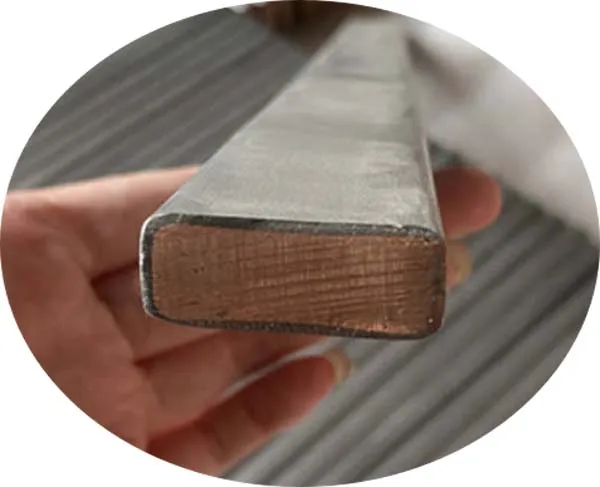
Here is the complete production process, detailing how titanium clad copper is manufactured and why it has become a preferred material for industrial applications.
1. What Is Titanium Clad Copper?
Titanium Clad Copper is a bimetal composite material created by bonding pure titanium (Grade 1 or Grade 2) with a high-conductivity copper core (C11000 / T2). It combines:
· The corrosion resistance of titanium
· The electrical conductivity of copper
· Long service life in harsh chemical or electrochemical environments
· Stable mechanical strength and excellent machinability
Common industry names include:
Titanium Clad Copper Bar, Titanium Copper Busbar, Titanium Clad Copper Rod, Titanium Clad Copper Flat Bar, Titanium Copper Composite Rod, Ti-Cu Bimetal Bar, Explosion Bonded Titanium Clad Copper, and Titanium Copper Conductor Bar.
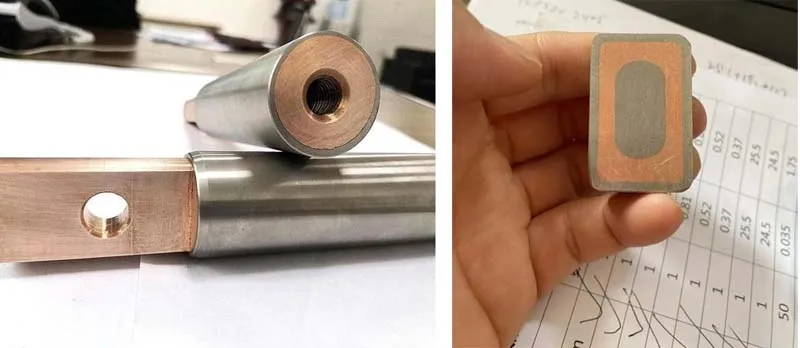
2. Titanium Clad Copper Manufacturing Process
Producing high-quality titanium clad copper requires precision bonding technology and multiple forming processes. Below is the typical manufacturing workflow used by leading factories.
Step 1: Material Preparation and Surface Treatment
Titanium (Gr1/Gr2) and copper (C11000/T2) are cleaned and prepared using:
· Degreasing
· Mechanical surface roughening
· Oxide removal
· Sanding or brushing
· Strict dryness control
This ensures an active bonding surface free from contamination.
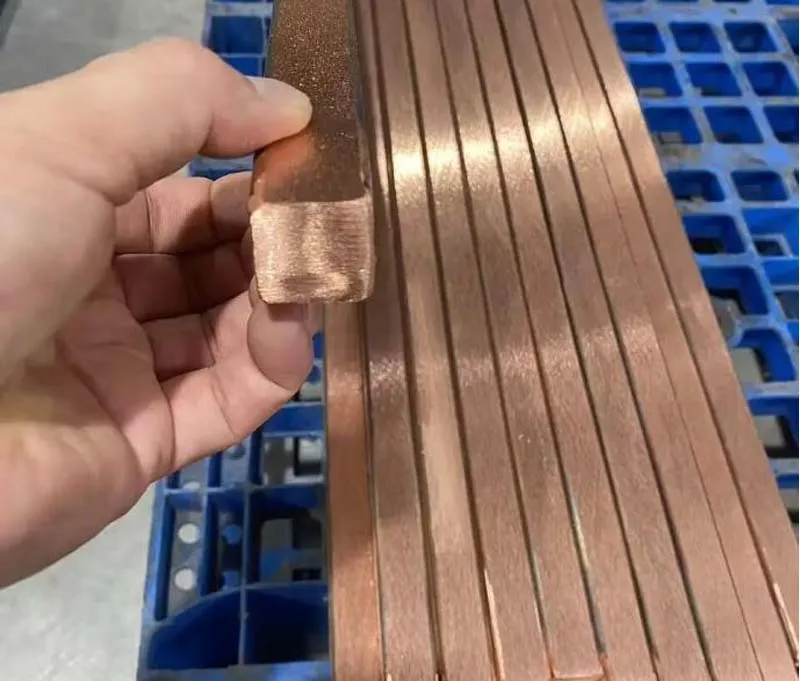
Step 2: Explosion Bonding or Hot Rolling Composite
• Explosion Bonding (Explosive Welding)
A high-energy metallurgical bonding process widely used for Titanium Copper Composite Bars.
Advantages include:
• Extremely strong metallurgical interface
• No delamination
• Ideal for thick composite billets
• Hot Rolling Bonding / Vacuum Diffusion Bonding
Suitable for continuous production. Benefits:
• Uniform titanium layer
• Stable bonding strength
• Ideal for thin titanium cladding
These processes form the initial Ti-Cu composite block.
Step 3: Hot Extrusion or Hot Forging
The bonded billet is extruded or forged into:
• Titanium Clad Copper Rod
• Titanium Clad Copper Bar
• Titanium Copper Busbar
• Titanium Composite Flat Bar
• Custom conductor profiles
This step increases density, improves bonding quality, and shapes the product.
Step 4: Cold Drawing, Straightening, and Precision Sizing
After forming, the bars go through:
• Repeated cold drawing
• Straightening
• Dimensional calibration
• Surface finishing
This stage ensures accurate tolerance, smooth surfaces, and consistent titanium layer thickness.
Step 5: CNC Machining and Custom Fabrication
Most customers search for customized titanium clad copper components, so advanced machining capabilities are essential.
Typical processing includes:
• CNC drilling
• Thread tapping
• Milling slots
• End-face machining
• Bending and forming
• Welding titanium end caps
These customized Ti-Cu conductor bars are widely used in plating racks, anode systems, power distribution, and electrochemical equipment.
Step 6: Surface Treatment
To enhance corrosion resistance and appearance:
• Polishing
• Brushed finishing
• Pickling and passivation
• Sandblasting
• This ensures a protective, defect-free titanium surface.
Step 7: Inspection and Quality Control
Before shipment, titanium clad copper undergoes strict inspection:
• Ultrasonic Testing (UT)
• Eddy Current Testing (ET)
• Dye Penetrant Testing (PT)
• Tensile and peel-strength tests
• Titanium layer thickness measurement
• Dimensional accuracy inspection
These tests ensure the product meets industrial standards and long-term application requirements.
4. Other Available Composite Materials
Besides Titanium Clad Copper, we also supply other bimetal composite materials for different industrial applications, such as:
• Titanium Clad Aluminum (Ti/Al)
• Stainless Steel Clad Copper (SS/Cu)
• Zirconium Clad Copper (Zr/Cu)
• Niobium Clad Copper (Nb/Cu)
• Titanium Clad Stainless Steel (Ti/SS)
These materials are used in special environments requiring unique combinations of conductivity, corrosion resistance, and mechanical strength.
 +86-731-82224155
 8613272400394
 enquiry@jetvisiontitanium.com