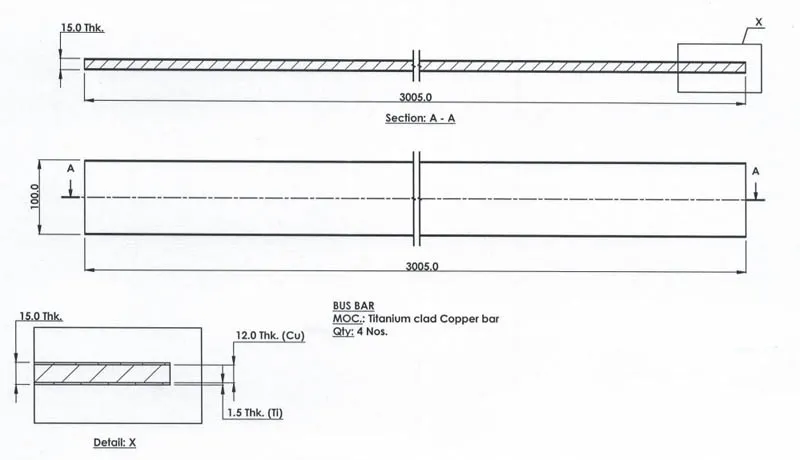
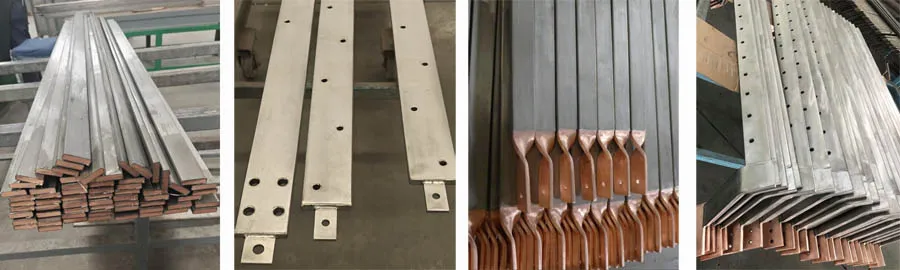
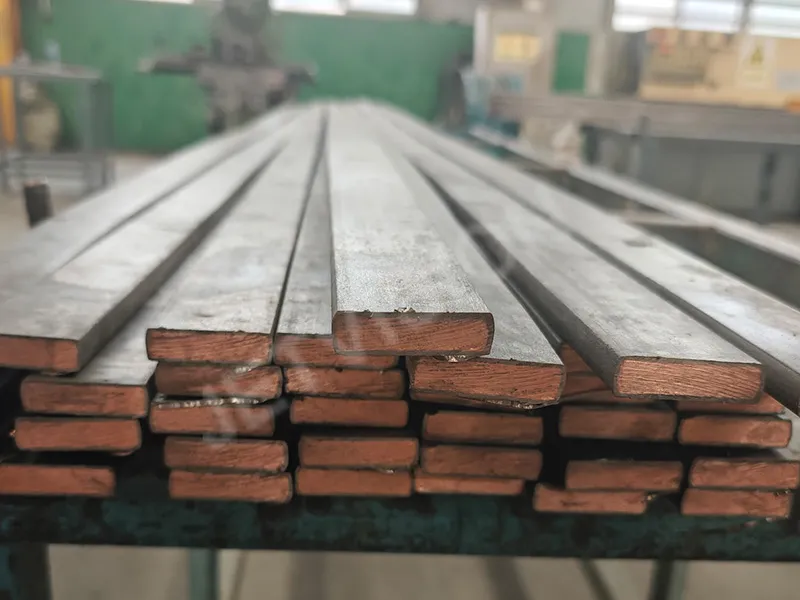
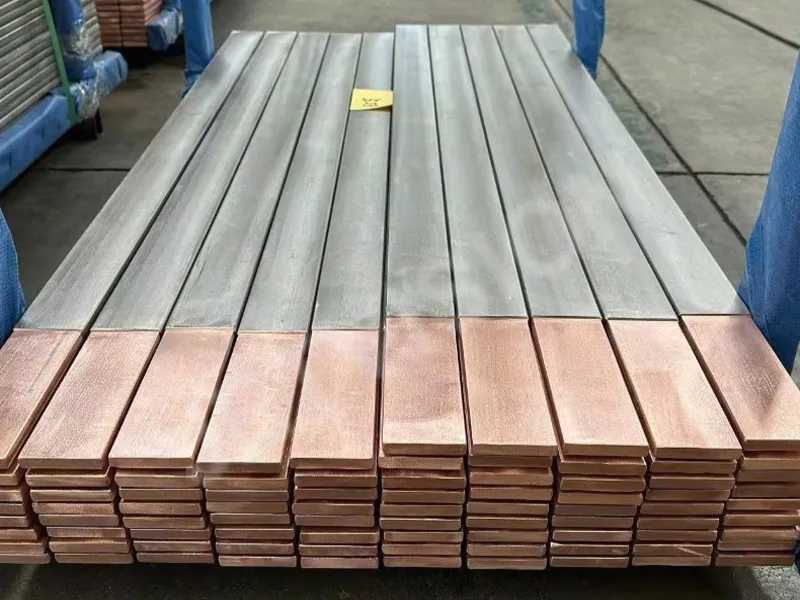
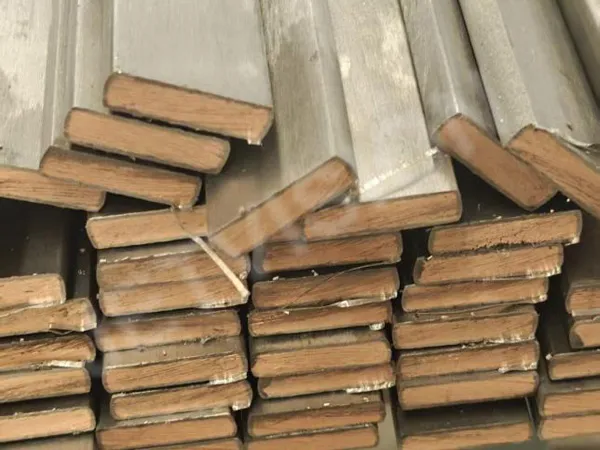
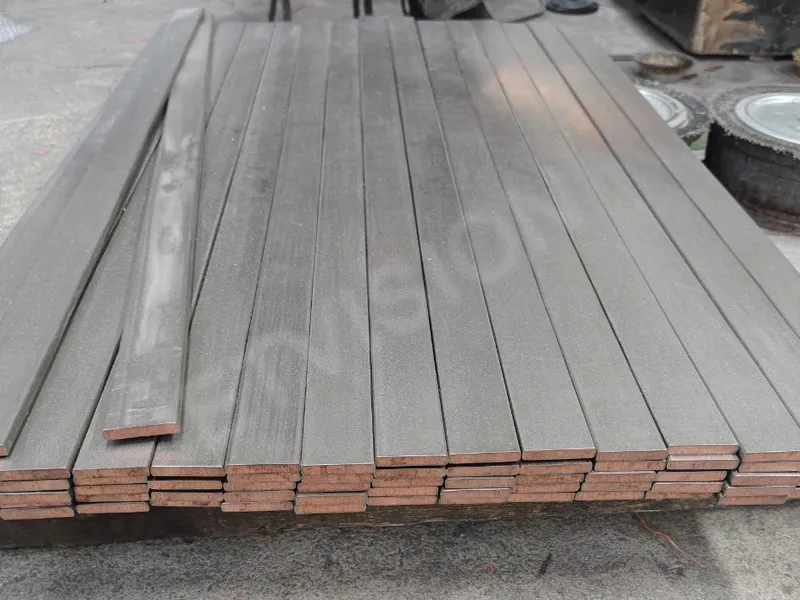
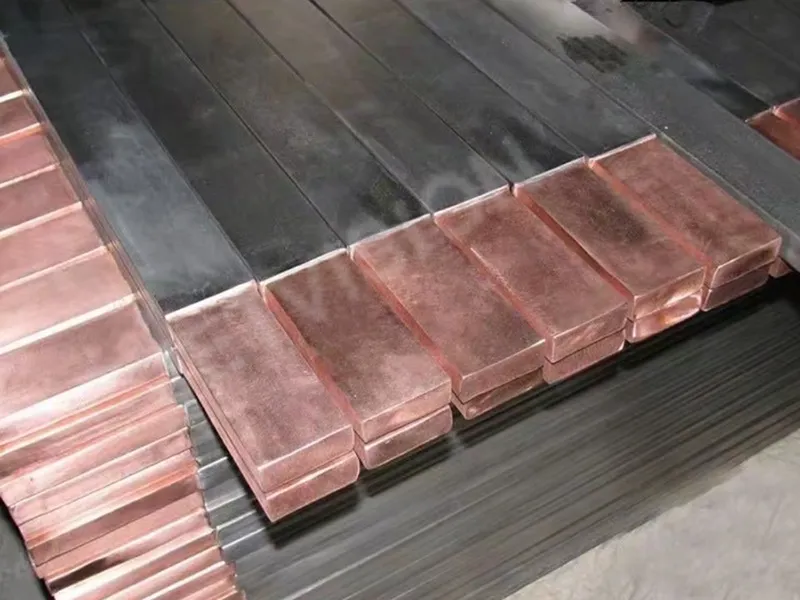
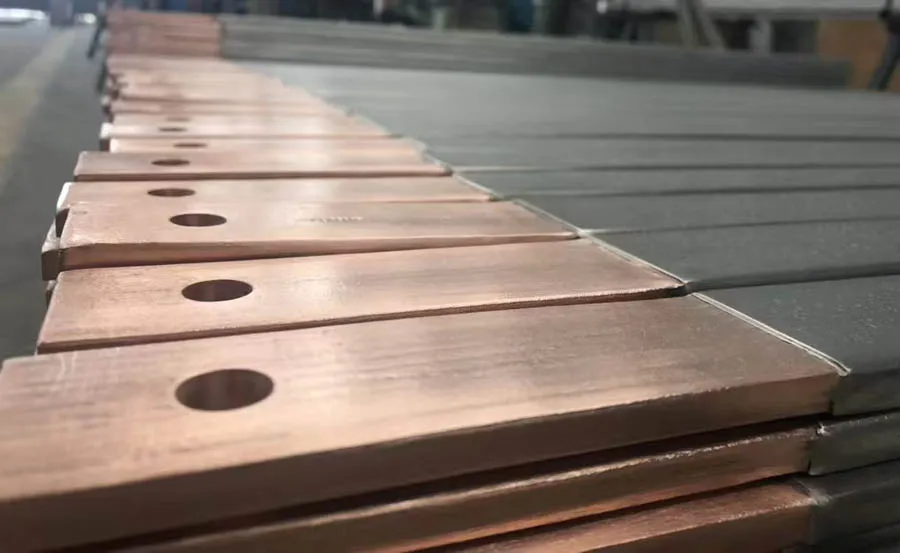
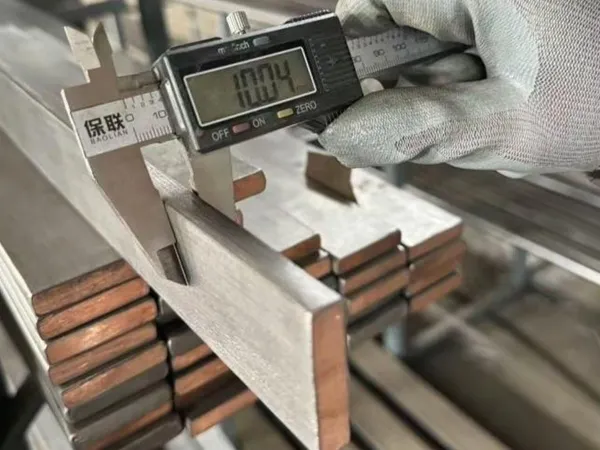
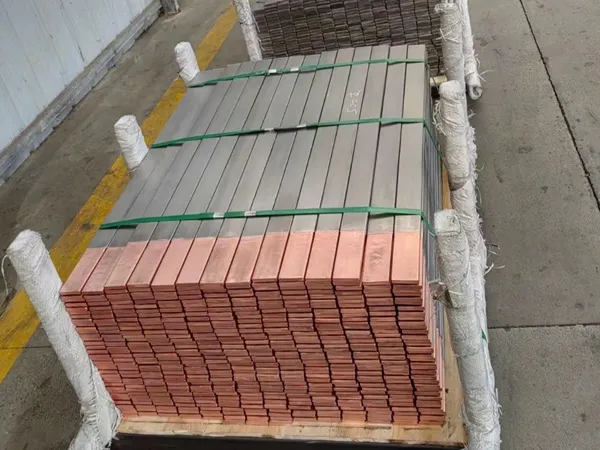
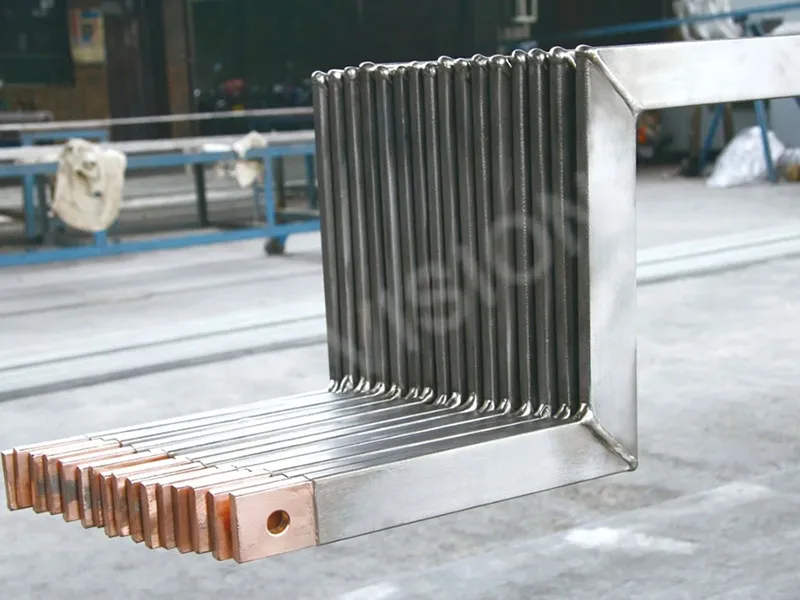
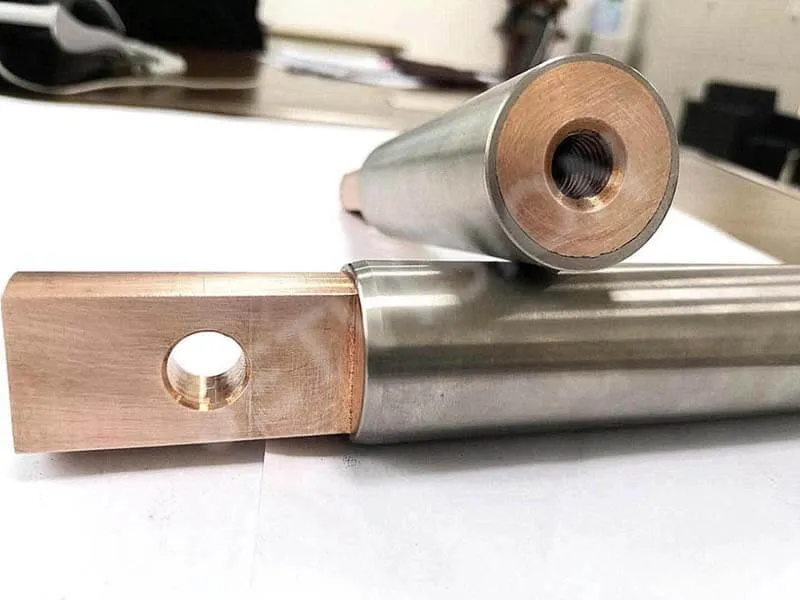
Titanium Clad Copper (Ti-Cu Clad)is a high performance bimetallic conductor composed of a pure copper core and an industrial-grade titanium outer layer. This composite material combines the excellent electrical conductivity of copper with the superior corrosion resistance of titanium, making it ideal for harsh chemical and electrochemical environments.
We manufacture a wide range of titanium clad copper bars,rods,busbars, and anode plates using explosive bonding,hot rolling, or diffusion welding techniques.
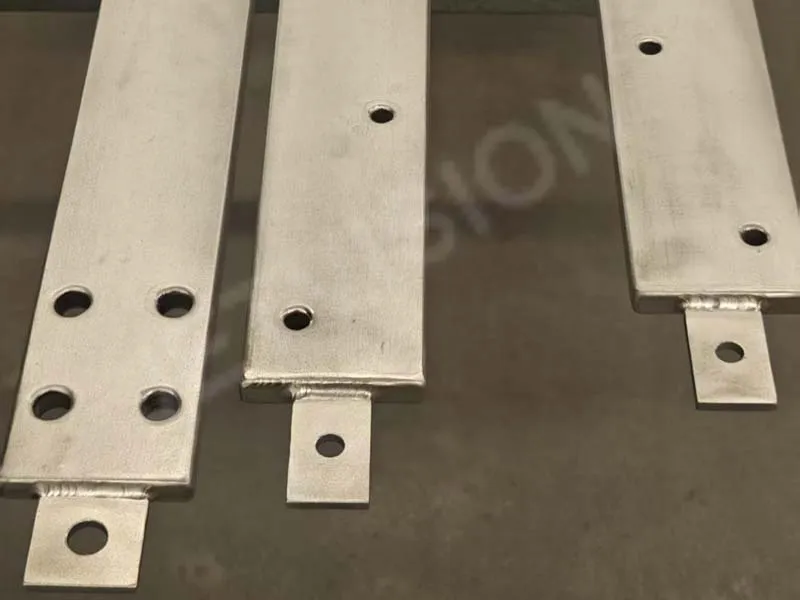
Titanium Clad Copper Busbar is a premium bimetallic conductor composed of a high purity electrolytic copper core (C11000 or T2) and a corrosion resistant titanium cladding layer (Grade 1 or Grade 2). This product is specially designed for electrochemical applications requiring both excellent electrical conductivity and outstanding resistance to acidic or alkaline environments.
Using explosion bonding or diffusion welding, the titanium and copper are metallurgically bonded to ensure high bonding strength, uniform thickness, and long-lasting performance under harsh industrial conditions.
Substrate materials: Copper T1, T2/C11000, anaerobic Copper TU1 TU2, Aluminum etc.
The clad materias: Titanium Ti, Zirconium Zr, Nickel Ni, Tantalum Tan, stainless steel (304, 316L), etc.
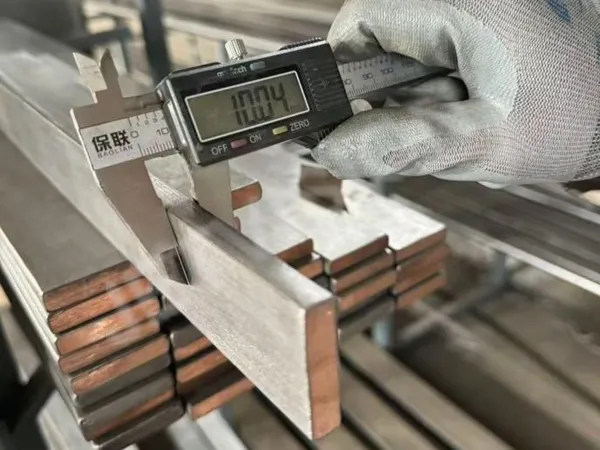
clad material layer thickness: conventional:1.0-2.5 mm
Main cross-section shape and size range (mm) :
Rectangular width: (20-150) x thickness (6-30)
Circle: Φ (8 ~ 50)
Square model: (10- 30)
Silk material: Φ (2.0-8.0)
1.Raw Material Preparation
Select high-purity electrolytic copper plate or strip (C11000 / T2)
Select corrosion-resistant titanium plate (Gr1 or Gr2)
Inspect surface flatness and chemical composition
2. Surface Treatment
Degreasing and pickling of copper and titanium surfaces
Grit blasting or brushing to increase bonding strength
Ensure oxide-free, clean metal surfaces for bonding
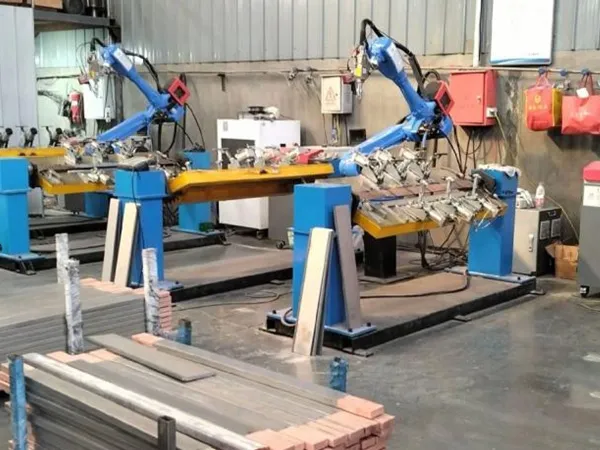
3. Explosive Bonding / Explosion Welding
Align copper and titanium plates
Use controlled detonation to bond the metals metallurgically
Form a strong bimetal interface without melting the core
4. Heat Treatment (If Required)
Relieve internal stress from explosive bonding
Improve ductility and bonding stability
5. Hot Rolling / Cold Rolling (Optional)
Reduce thickness, improve surface finish and dimensional accuracy
Achieve uniform cladding thickness
6. Cutting and Machining
Cut to required length and width
CNC machining for custom shapes or bolt holes
Edge trimming and polishing
7. Testing and Inspection
Ultrasonic testing (UT) for bonding integrity
Peel strength and shear tests
8. Dimensional and surface inspection
Surface Finishing
Pickling, polishing or coating as per customer request
Optional surface oxidation protection treatment
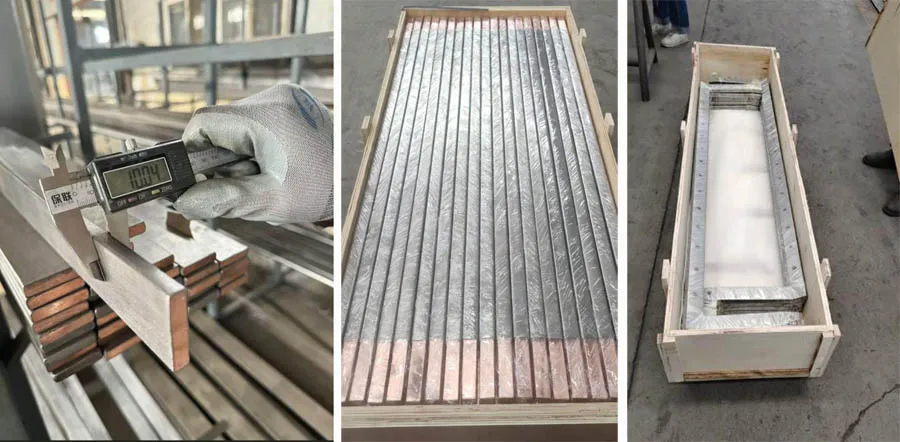
9. Packing & Delivery
Anti-rust packaging
Seaworthy wooden crates or custom export packing
Marking and labeling for traceability
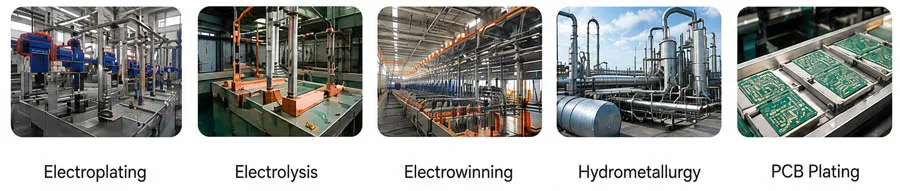
1.Electrolysis Industry
Chlor-alkali electrolysis systems
Hydrogen production equipment
Sodium hypochlorite generation units
Titanium copper busbars for electrolyzers
Conductive rods in electrochemical reactors
2.Electroplating & Surface Finishing
Acid-resistant anode busbars
Conductive bars for chrome plating, nickel plating
Titanium-clad busbar for anodizing tanks
Long-life current connectors in plating baths
3.Battery & Energy Storage Systems
Lithium-ion battery connectors
Titanium copper interconnects in battery modules
Corrosion-proof bimetal terminals
High-current conductors in new energy battery production
4.Water Treatment & Environmental Systems
Electrode busbars for electro-flocculation
Titanium copper current collectors for wastewater systems
Desalination plant conductive structures
5.Chemical Processing & Industrial Corrosion Control
Anti-corrosive busbars in acid/alkali chemical tanks
Titanium copper conductors in solvent extraction
Structural conductors in corrosive gas/liquid media
6.Power & Electrical Engineering
DC high-current transmission in harsh environments
Power distribution in chemical zones
Titanium copper grounding busbars in electrolytic substations