Titanium Clad Copper vs Stainless Steel: Which Material is Better for Busbar Applications?
Part One: Original Comparison
When selecting materials for busbars in demanding environments such as electroplating, electrolysis, and chemical processing, engineers often compare titanium clad copper (Ti Cu) and stainless steel (SS). Each material offers distinct advantages depending on the application requirements.
1. Electrical Conductivity
Titanium Clad Copper Busbar
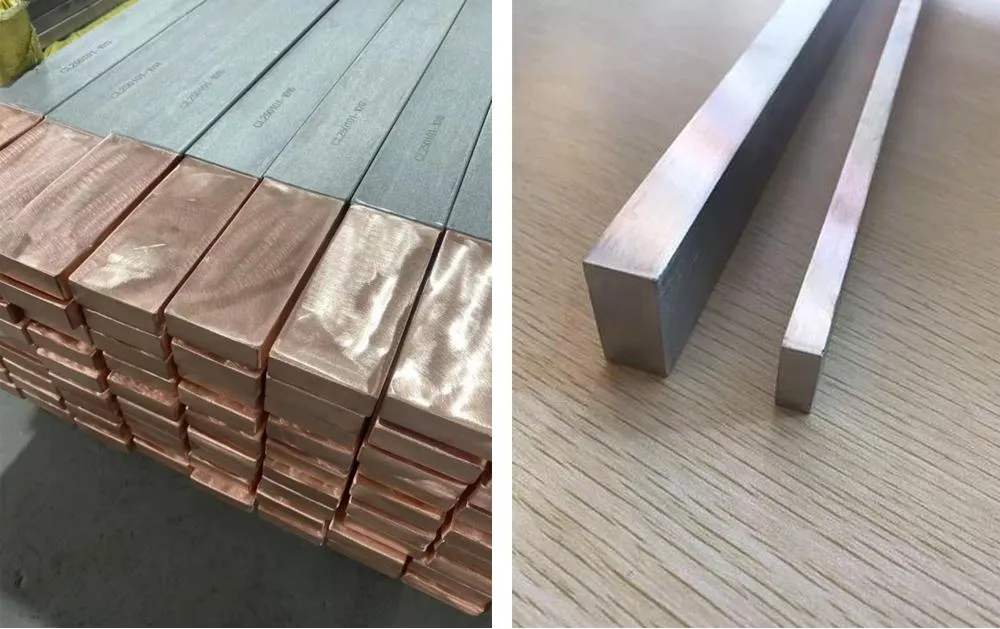
Combines the high electrical conductivity of copper (typically≥97% IACS) with a corrosion resistant titanium outer layer. Ideal for high current applications.
Stainless Steel Busbar
Significantly lower conductivity (approx. 2–3% IACS), leading to higher energy loss and heat generation.
Conclusion: Titanium clad copper is the preferred choice for efficient current transmission.
2. Corrosion Resistance
Titanium Clad Copper
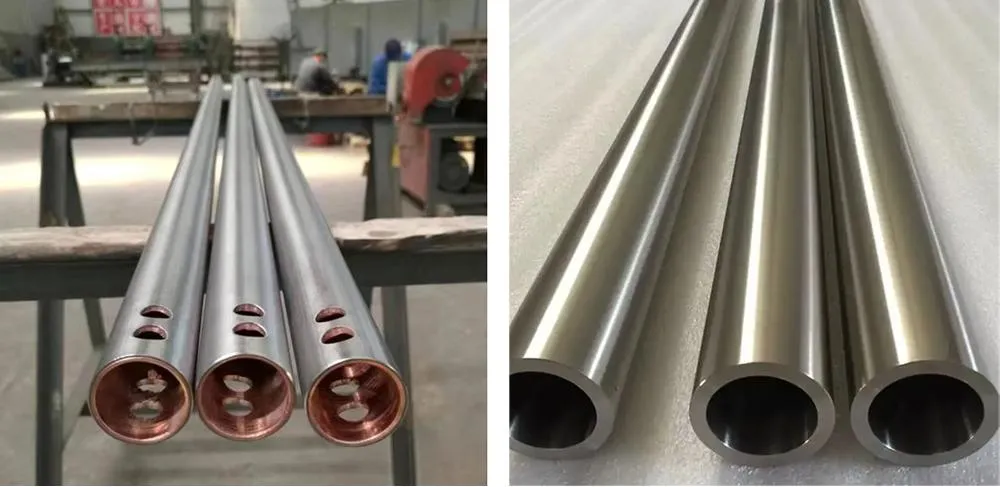
The titanium layer (Grade 1 or Grade 2) provides excellent resistance to acids, chlorides, and harsh electrolytes. Suitable for aggressive chemical environments.
Stainless Steel
Offers moderate corrosion resistance, but may suffer from pitting or crevice corrosion in chloride-rich environments.
Conclusion: Titanium clad copper performs better in highly corrosive conditions.
3. Mechanical Strength & Fabrication
Titanium Clad Copper
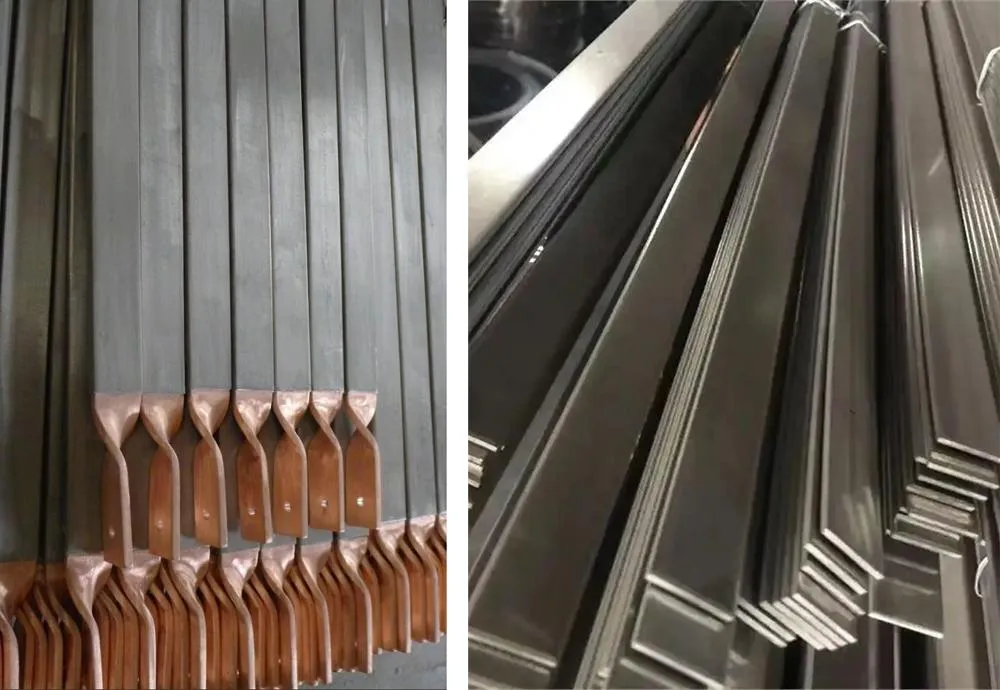
Maintains strong metallurgical bonding after bending, drilling, and machining. No delamination under proper processing.
Stainless Steel
Good mechanical strength and easy fabrication, but lacks composite advantages.
Conclusion: Both materials are workable, but Ti Cu offers better functional performance.
4. Cost Consideration
Titanium Clad Copper
Higher initial cost, but lower lifecycle cost due to reduced maintenance and longer service life.
Stainless Steel
Lower upfront cost, but may require more frequent replacement in corrosive environments.
Conclusion: Titanium clad copper is more cost effective in long-term operation.
5. Typical Applications
Titanium Clad Copper Busbar: Electroplating lines; Electrolysis systems; Anodizing plants; Cathode/anode connections
Stainless Steel: Structural components; Low current applications; Non-critical environments; Final Recommendation
For engineers seeking high conductivity, corrosion resistance, and long service life, titanium clad copper busbars are the superior solution. Stainless steel may be suitable for less demanding or budget-sensitive applications, but it cannot match the overall performance of Ti Cu in electrochemical environments.
Part Two: Technical Specifications
1. Bonding Strength
|
Parameter
|
Value
|
Remarks
|
|
Shear Strength
|
≥130 MPa
|
Industry standard, achieved by explosive cladding + rolling
|
|
Typical Value
|
135 MPa
|
Measured data from some manufacturers
|
|
Bonding Rate
|
≥95%
|
Ultrasonic flaw detection, higher rate means better conductivity
|
|
Premium Bonding Rate
|
≥98%
|
Achievable by some manufacturers
|
Standard Statement:
"The bonding strength between titanium and copper is≥130 MPa, with a bonding rate of over 95% (tested by ultrasonic flaw detection). This ensures no delamination under thermal expansion or mechanical processing."
Practical Verification Method:
In production, a destructive test is commonly used: during machining, when the titanium layer thickness is reduced to 0.3-0.5mm, if it remains bonded to the copper core without separation, the bonding strength is considered acceptable for service.
2. Cladding Thickness Ratio
|
Parameter
|
Range
|
Typical Value
|
|
Titanium Cladding Thickness
|
0.5 mm – 3.0 mm
|
1.0–1.2 mm (most common)
|
|
Copper Core Thickness
|
Customized based on total size
|
Total thickness minus Ti cladding
|
|
Thickness Tolerance
|
±20% of nominal
|
e.g., 1.0mm nominal = 0.8-1.2mm actual
|
Cladding Thickness Selection Guide:
|
Application
|
Recommended Ti Thickness
|
Reason
|
|
Electroplating/Electrolysis Racks
|
1.0–1.5 mm
|
Standard corrosive environment, balance cost and life
|
|
Severe Corrosion (Chlor-alkali, Seawater)
|
1.5–2.0 mm
|
Extended service life
|
|
Precision/Small Components
|
0.5–0.8 mm
|
Space constrained, conductivity priority
|
Standard Statement:
"Standard titanium cladding thickness is 1.0–1.2 mm, with a tolerance of±20%. Heavier cladding (up to 3.0 mm) is available for severe corrosion conditions."
3. Current Carrying Capacity / Conductivity
|
Parameter
|
Ti-Cu
|
Stainless Steel (304/316)
|
Pure Copper (Reference)
|
|
Conductivity (% IACS)
|
≥85%
|
approx. 2–3%
|
100%
|
|
Volume Resistivity
|
~2.03 × 10⁻⁶ Ω·cm
|
~7.2 × 10⁻⁵ Ω·cm
|
~1.72 × 10⁻⁶ Ω·cm
|
Current Carrying Capacity Calculation Method:
For a given cross-section of Ti-Cu conductor, the equivalent current capacity can be estimated as:
Equivalent conductive cross-section = Copper core cross-section ×0.85 (considering titanium layer resistance, actual ≥85% IACS)
Example Comparison (same size: 50mm ×10mm cross-section):
Ti-Cu (1mm Ti cladding, 48×10mm copper core): Effective conductivity ~85% IACS
Stainless Steel (same size): Conductivity ~2.5% IACS
Ti-Cu carries approximately 34 times more current than stainless steel
Sales Statement:
"Ti-Cu offers≥85% IACS conductivity, while stainless steel is only 2-3% IACS. For the same cross-section, Ti-Cu carries approximately 30 times more current with significantly less heat generation."
4. Applicable Standards
Standard Title Application
|
Standard
|
Title
|
Application
|
|
GB/T 12769
|
Titanium-Copper Composite Rod
|
Chinese national standard, most commonly used
|
|
ASTM B898
|
Standard Specification for Titanium Cladding
|
Internationally recognized standard
|
|
Base Material Standards
|
GB/T 3620 / GB/T 5231
|
Titanium and copper material specifications
|
Standard Statement:
"Our Ti-Cu products comply with GB/T 12769 and ASTM B898, with copper core meeting GB/T 5231 (T1/T2) and titanium cladding meeting GB/T 3620 (Gr.1/Gr.2)."
Part Three: Key Performance Comparison Table (Quick Reference)
|
Parameter
|
Ti-Cu
|
Stainless Steel (SS304/316)
|
Remarks
|
|
Conductivity (% IACS)
|
≥85%
|
2–3%
|
Ti-Cu has significant advantage
|
|
Bonding Strength (MPa)
|
≥130
|
N/A
|
Not applicable for monolithic material
|
|
Ti Cladding Thickness
|
0.5–3.0 mm
|
N/A
|
Customizable
|
|
Bonding Rate
|
≥95%
|
N/A
|
Ultrasonic tested
|
|
Corrosion Resistance
|
Excellent (Ti layer)
|
Moderate (pitting risk in chlorides)
|
Ti-Cu performs better
|
|
Initial Cost
|
Higher
|
Lower
|
—
|
|
Lifecycle Cost
|
Low
|
High (frequent replacement)
|
Ti-Cu more economical long-term
|
Part Four: FAQ for Customers
Q1: What happens if the titanium layer wears out?
A: The titanium layer is typically 1.0-1.2mm thick and can last 5-10 years under normal operating conditions. Localized wear can be repaired using titanium welding wire. Compared to stainless steel which requires complete replacement, maintenance cost is lower.
Q2: Can it be drilled, bent, and welded?
A: Yes. Ti-Cu has good workability. Drilling and bending will not cause delamination (guaranteed by≥95% bonding rate). Both ends can be drilled or welded with titanium terminals. Titanium layers can be joined by argon arc welding, while the copper core can be joined by copper welding.
Q3: How much conductivity loss compared to pure copper?
A: Pure copper has 100% IACS conductivity, while Ti-Cu has approximately 85-90% IACS —a loss of about 10-15%. However, this can be compensated by slightly increasing the copper core cross-section during design, while gaining the corrosion protection of the titanium layer —something pure copper cannot provide.
Q4: How do you prove the bonding strength is qualified?
A: We provide ultrasonic flaw detection reports ensuring a bonding rate of≥95%. Third-party shear strength test reports (≥130 MPa) are also available upon request.
Part Five: Technical Specification Template (For Quotations)
Ti-Cu Clad Busbar – Technical Specifications
|
Parameter
|
Value
|
|
Cladding Material
|
Titanium Gr.1 / Gr.2 (ASTM B265)
|
|
Core Material
|
Copper T2 / C11000 (GB/T 5231)
|
|
Bonding Strength (Shear)
|
≥130 MPa
|
|
Bonding Rate
|
≥95% (Ultrasonic tested)
|
|
Conductivity
|
≥85% IACS
|
|
Ti Cladding Thickness
|
0.5 – 3.0 mm (1.0-1.2 mm typical)
|
|
Thickness Tolerance
|
±20% of nominal
|
|
Standard
|
GB/T 12769 / ASTM B898
|
|
Shapes Available
|
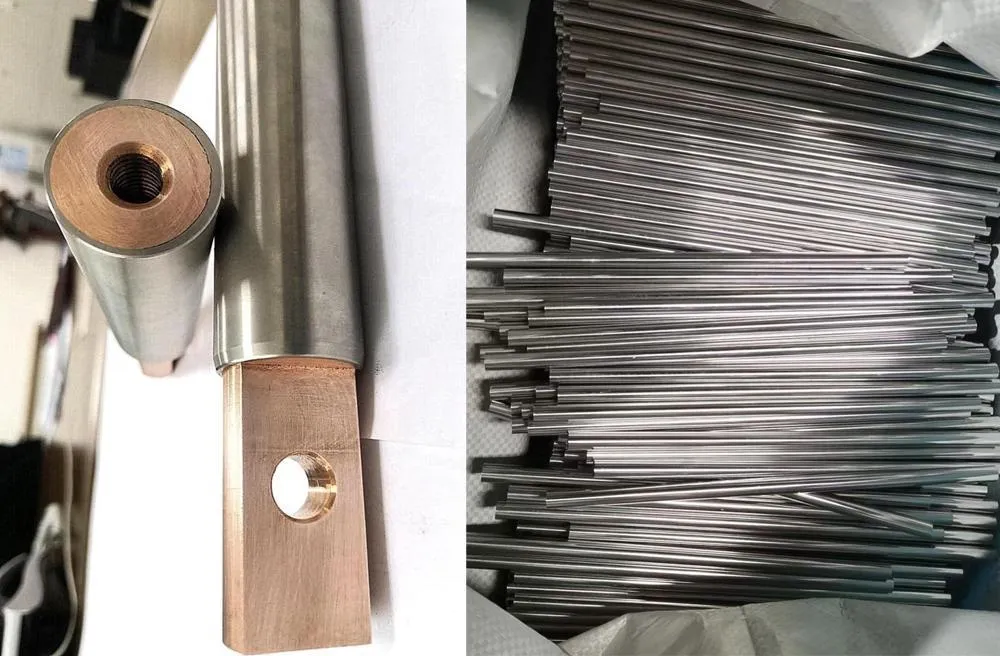
Round, Square, Rectangular, Drum-shaped
|
|
Max Length
|
≤6000 mm
|
Key Advantages:
High conductivity (≥85% IACS) vs. stainless steel (2-3% IACS)
Excellent corrosion resistance in chlorides and acids
Strong metallurgical bonding –no delamination
Longer service life, lower lifecycle cost
 +86-731-82224155
 8613272400394
 enquiry@jetvisiontitanium.com