In highly corrosive acidic environments such as electrolysis, electroplating, hydro metallurgy, and the chlor-alkali industry, the selection of conductive materials directly affects production efficiency and equipment service life. Although traditional pure copper busbar offer excellent electrical conductivity, they are highly susceptible to corrosion in acidic environments. Pure titanium, on the other hand, provides outstanding corrosion resistance but has poor electrical conductivity.
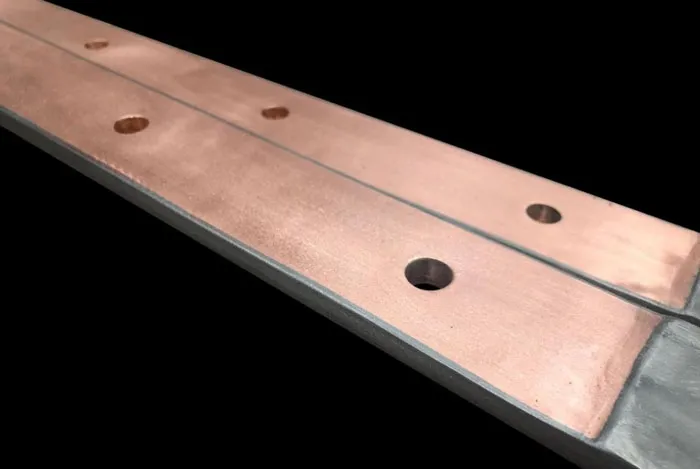
Titanium clad copper busbar was developed as the ideal solution to overcome this contradiction. By combining the exceptional corrosion resistance of titanium with the superior electrical conductivity of copper, it has become the preferred conductive material for acidic environments.
1. Material Composite Structure: Combining the Advantages of Two Metals
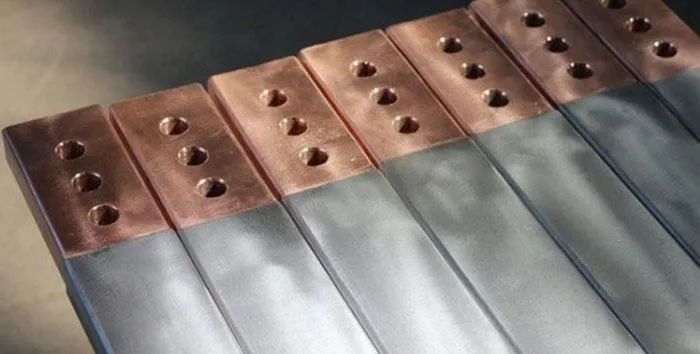
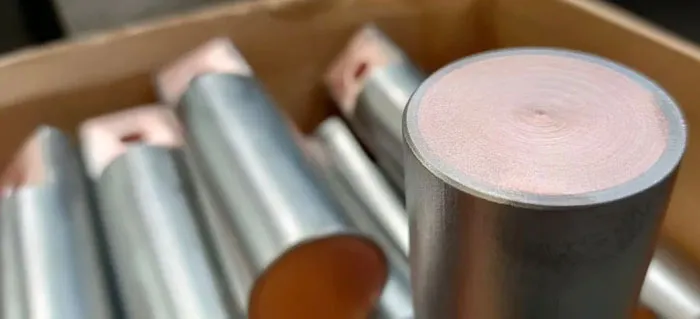
Titanium clad copper busbar is a bimetal composite material manufactured through advanced metallurgical bonding processes such as explosive bonding, hot rolling, or high-temperature high-pressure diffusion bonding. In this structure, the titanium layer is firmly bonded to the copper core, forming an integrated material with complementary properties.
Outer Titanium Layer (Ti):Provides excellent corrosion resistance and directly contacts acidic media.
Inner Copper Core (Cu):Carries electrical current and ensures high conductivity.
Metallurgical Bonding Interface:Creates a strong and permanent bond that prevents delamination or separation during long-term service.
This “external protection + internal conductivity”design enables titanium clad copper busbarto maintain both long-term corrosion resistance and excellent electrical performance in aggressive acidic environments.
2. Analysis of Core Advantages
2.1 Excellent Corrosion Resistance - The "Armor" in Acidic Environments
Disadvantage of pure copper: In acidic environments or those containing chloride ions, copper is highly prone to corrosion, forming patina or pitting, which leads to increased contact resistance, degraded conductivity, and even fracture failure in severe cases.
Advantage of titanium: Titanium is a metal with very active chemical properties but is extremely easy to passivate in oxidizing media. It quickly forms a dense, continuous, and stable oxide film (primarily TiO₂) on its surface, which provides strong corrosion resistance.
Specific performance:
Excellent corrosion resistance in strong acids such as sulfuric acid, hydrochloric acid, and nitric acid
In chloride-containing electrolytes (such as seawater and hydrometallurgical electrolyte solutions), the corrosion rate of titanium is less than 0.011 mm/year
In chlor-alkali industry electrolyzers, titanium clad copper can be used stably for 5-10 years or even longer, while the service life of pure copper busbars is typically less than one year
Standard product titanium layer thickness is 0.5-5.0 mm, customizable according to corrosion environment severity
Conclusion: The titanium layer acts as an "armor" that completely isolates the acidic medium from the copper core, fundamentally solving the corrosion problem of copper.
2.2 High Electrical Conductivity - The "Highway" for Current Transmission
Disadvantage of pure titanium: Titanium has an electrical conductivity of only 3.1% IACS (International Annealed Copper Standard), far lower than copper. If a pure titanium busbar were used, even if its corrosion resistance met requirements, the high internal resistance would cause severe energy loss and overheating.
Advantage of copper: Copper (C11000, T2, etc.) has an electrical conductivity of 97-101% IACS, making it one of the best conductive metal materials available, second only to silver.
Design of titanium clad copper: Since the titanium layer serves only as a protective layer and does not participate in the main current conduction, the current is transmitted almost entirely through the highly conductive copper core. The copper core is made of high purity electrolytic copper (≥99.9%), achieving a conductivity of over 90% IACS. In practical applications, the conductivity of titanium clad copper busbars is nearly identical to that of pure copper busbar.
Comparison data:
|
Material
|
Conductivity (% IACS)
|
|
Pure Titanium
|
~3.1%
|
|
Pure Copper
|
97-101%
|
|
Titanium Clad Copper
|
≥90%
|
Conclusion: Titanium clad copper achieves significantly improved corrosion resistance without sacrificing electrical conductivity.
2.3 Energy Saving and Improved Current Efficiency - Key to Reducing Energy Consumption
Titanium clad copper busbars significantly reduce energy consumption in electrochemical applications (such as electrolytic cells and electroplating baths):
Reduced internal resistance: Due to the high conductivity of the copper core, the overall resistance of titanium clad copper busbars is far lower than that of pure titanium materials, effectively reducing cell voltage
Research data shows: Compared with traditional pure titanium electrodes, the cell voltage can be reduced by 0.1-0.8V when using titanium clad copper as the anode substrate for coated titanium anodes
Energy saving effect: For large-scale electrolysis plants, a 0.5V reduction in cell voltage translates to annual electricity savings of hundreds of thousands or even millions of kilowatt-hours
Uniform current distribution: The high conductivity of the copper core ensures more uniform current distribution across the entire busbar, avoiding localized overheating and current concentration, thus improving electrolysis efficiency and product purity
2.4 Long Service Life and Low Maintenance Costs - Whole Life Cycle Economy
Although the initial procurement cost of titanium clad copper is higher than that of pure copper busbars, considering the whole life cycle cost, titanium clad copper offers significant economic
Advantages:
|
Comparison
|
Pure Copper Busbar
|
Titanium Clad Copper Busbar
|
|
Corrosion resistance in acidic media
|
Poor, fast corrosion rate
|
Excellent, extremely low corrosion rate
|
|
Service life
|
0.5-1 year
|
5-10+ years
|
|
Replacement frequency
|
1-2 times per year
|
Once every 5-10 years
|
|
Production loss due to downtime
|
Frequent replacement causes production shutdowns
|
Almost no frequent replacement
|
|
Maintenance cost
|
High (regular inspection and replacement)
|
Low (virtually maintenance-free)
|
|
Long term total cost
|
High
|
Low
|
In addition, titanium clad copper reduces production contamination caused by corrosion (such as copper ions entering the electrolyte) and improves the operating environment, aligning with the direction of green and environmentally friendly industrial development.
3. Typical Acidic Application Scenarios
3.1 Chlor-Alkali Industry (Production of Caustic Soda and Chlorine)
Environment: High-concentration sodium chloride solution, chlorine gas, sodium hydroxide
Application: Conductive components and electrode materials in metal anode electrolyzers
Function: Replaces graphite anodes and pure copper conductive bars, significantly reducing energy consumption and extending equipment life
3.2 Hydrometallurgy (Copper, Zinc, and Nickel Electrowinning)
Environment: Sulfate systems, chloride systems, acidic leach solutions
Application: Cathode conductive bars and anode conductive beams in electrolytic cells
Function: Corrosion resistance and high conductivity ensure electrolysis process stability and current efficiency
3.3 Electroplating Industry (Copper, Nickel, and Chrome Plating)
Environment: Acidic plating solutions (sulfuric acid, hydrochloric acid, fluoroboric acid, etc.), high temperature
Application: Conductive busbars and anode bars in electroplating baths
Function: Prevents plating bath contamination, reduces anode sludge generation, and improves plating quality
3.4 Printed Circuit Board (PCB) Manufacturing
Environment: Acidic etching solutions, acidic cleaning solutions
Application: Conductive components in copper electroplating equipment and etching equipment
Function: Corrosion resistance, ensuring uniform current distribution
3.5 Seawater Treatment and Marine Engineering
Environment: Chloride-containing seawater (highly corrosive)
Application: Conductive components in desalination equipment, marine cathodic protection systems
Function: Resists seawater corrosion, long service life
4.Why Not Simply Use "Titanium Plated Copper Busbar"?
Some may ask: Why not simply plate a layer of titanium onto the copper busbar surface? The answer is that plating cannot meet long term service requirements:
Plating is too thin: Electrodeposited or electroless titanium plating is typically only a few microns to tens of microns thick. In acidic environments, it is extremely prone to failure due to micropores, scratches, or localized damage. Once electrolyte penetrates to the copper core, rapid galvanic corrosion occurs (with copper acting as the anode, accelerating dissolution)
Insufficient adhesion: The adhesion between the plating and the substrate is far lower than metallurgical bonding, making it prone to peeling under thermal and mechanical stress
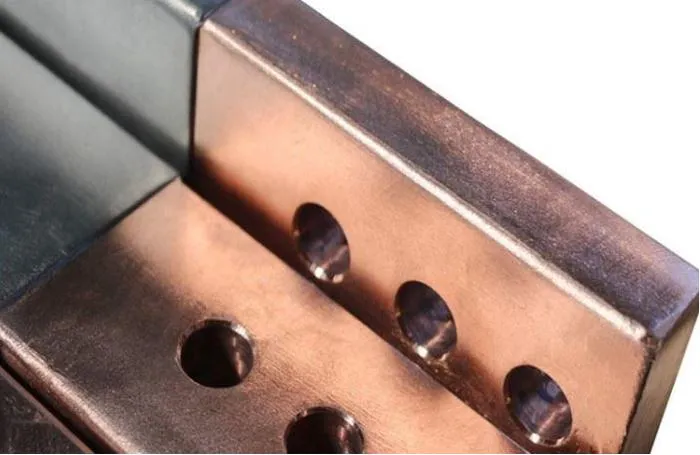
Advantages of titanium clad copper: The titanium layer formed by explosive cladding or hot rolling cladding can achieve a thickness of 0.5-5.0 mm with 100% metallurgical bonding and an interface bonding rate≥98%, without porosity or gaps, effectively isolating the corrosive medium
From chlor-alkali to hydrometallurgy, from electroplating to seawater treatment, titanium clad copper busbars have proven their reliability and economy worldwide—the optimal engineering solution for high-current transmission in acidic corrosive environments.
 +86-731-82224155
 8613272400394
 enquiry@jetvisiontitanium.com