Hot piercing is one of the most critical operations in titanium seamless tube manufacturing. The process converts solid titanium billets into hollow tube shells, which subsequently undergo rolling, heat treatment, straightening, inspection, and finishing operations before becoming finished seamless titanium tubes.
Billet Preparation and Heating
Prior to piercing, titanium billets are carefully inspected to ensure compliance with dimensional and surface quality requirements. Surface defects are removed when necessary to prevent imperfections from being transferred into the tube shell during deformation.
The billets are then heated to a controlled temperature range suitable for hot working. Precise temperature control is essential because titanium exhibits a relatively narrow processing window compared with many other metals. Uniform heating ensures sufficient plasticity while minimizing the risk of surface oxidation and material degradation.
Rotary Piercing Process
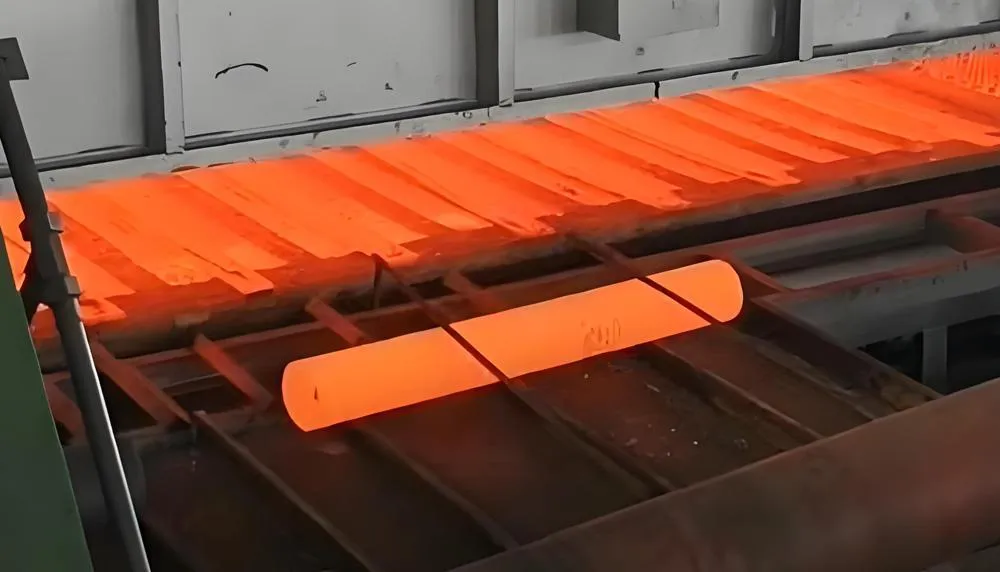
Once the target temperature is achieved, the heated billet is transferred to the rotary piercing mill.
During the piercing operation, the billet is compressed and rotated by angled rolls while advancing toward a piercing plug positioned at the centerline of the mill. Under the combined action of compressive and rotational forces, a cavity is gradually formed within the billet, transforming the solid material into a hollow shell.
This process requires careful control of:
Billet temperature
Roll angle and rotational speed
Piercing plug geometry
Feed rate and deformation ratio
Proper parameter control is essential to achieve uniform wall thickness, accurate dimensions, and a highquality internal surface.
Importance of the Piercing Stage
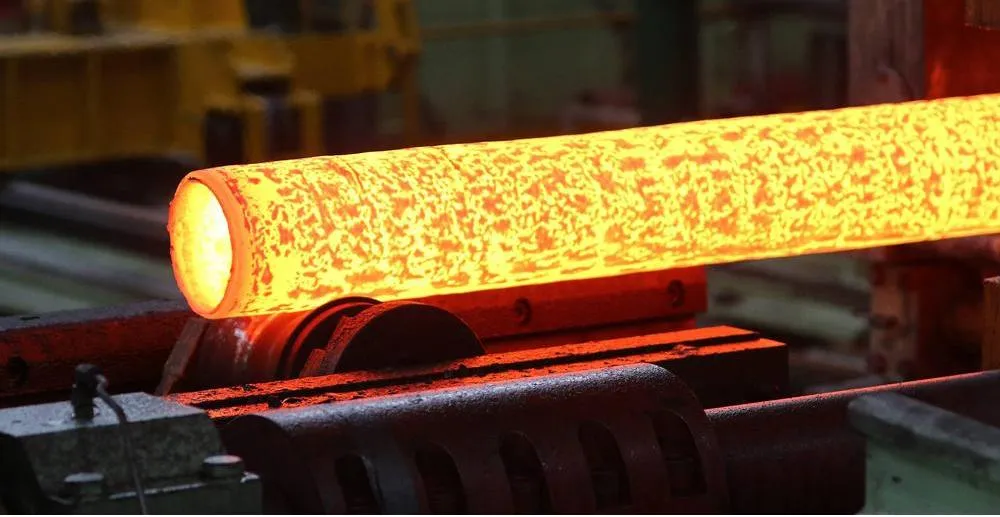
The quality of the pierced hollow shell has a direct impact on the subsequent manufacturing stages and the overall performance of the finished tube.
A well executed piercing process helps ensure:
Consistent wall thickness distribution
Good concentricity
Smooth internal surface quality
Reduced risk of internal defects
Improved dimensional stability during further processing
These characteristics are particularly important for titanium tubes used in critical applications where reliability and corrosion resistance are essential.
Subsequent Manufacturing Operations
After piercing, the hollow shells proceed to additional forming and finishing processes, including:
Tube rolling or sizing
Heat treatment
Straightening
Surface cleaning and pickling
Non-destructive testing
Dimensional inspection
Final packaging
Each stage is performed under strict quality control procedures to ensure compliance with customer specifications and applicable international standards.
Applications of Seamless Titanium Tubes
The seamless titanium tubes produced through this process are widely used in industries requiring outstanding corrosion resistance and high performance, including:
Heat exchangers
Condensers
Chemical processing plants
Desalination systems
Offshore engineering
Marine applications
Power generation facilities
With continuous investment in manufacturing technology and process optimization, we remain committed to delivering high quality seamless titanium tube products to customers worldwide.
 +86-731-82224155
 8613272400394
 enquiry@jetvisiontitanium.com