Titanium clad copper busbars are widely used in electrochemical and highcurrent applications where both electrical conductivity and corrosion resistance are required. Typical applications include electrolytic cells, electrowinning systems, electroplating equipment, chlor-alkali systems and other conductive components operating in corrosive environments.
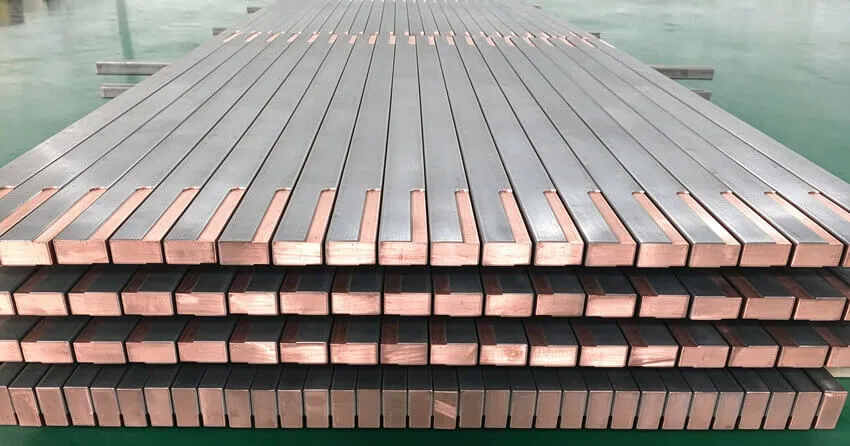
For engineering design, one of the key parameters is the current carrying capacity of the titanium clad copper busbar. Unlike a conventional copper busbar, its electrical performance depends on the copper core, titanium cladding, cross-sectional area, operating temperature and current distribution.
Start with the Copper Core Cross Section
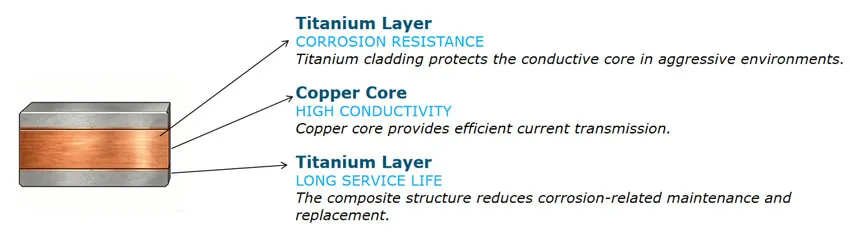
In most titanium clad copper busbars, the copper core provides the majority of the electrical conductivity, while the titanium layer provides corrosion resistance and protects the copper from the operating environment.
The approximate current density can be expressed as: J = I / A
Where: J = current density
I = operating current
A = effective conductive cross-sectional area
For a rectangular titanium clad copper busbar, the overall cross-sectional area is approximately: A = W×T
where W is the width and T is the total thickness.
However, when calculating electrical performance, the contribution of the titanium cladding should also be considered according to the actual material configuration and electrical contact conditions.
Consider the Conductivity of Each Material
Titanium and copper have significantly different electrical conductivities. Copper provides the main current-carrying path, while the titanium cladding is primarily selected for its corrosion resistance.
For this reason, a titanium clad copper busbar should not simply be treated as a solid titanium bar with the same dimensions.
The calculation should consider:
· Copper grade, such as C11000 / T2
· Titanium grade, such as Gr.1 or Gr.2
· Copper core thickness
· Titanium cladding thickness
· Total cross-sectional area
· Electrical connection and contact resistance
· Operating temperature
The metallurgical bond between titanium and copper is also important because a stable bonded interface helps maintain reliable electrical and mechanical performance during operation.
Current Density Is Not the Only Factor
A theoretical current-density calculation is useful for preliminary sizing, but the actual allowable current depends on the operating conditions.
Important factors include:
Busbar Dimensions
Increasing the width or thickness increases the conductive cross-sectional area and generally allows a higher operating current.
Temperature Rise
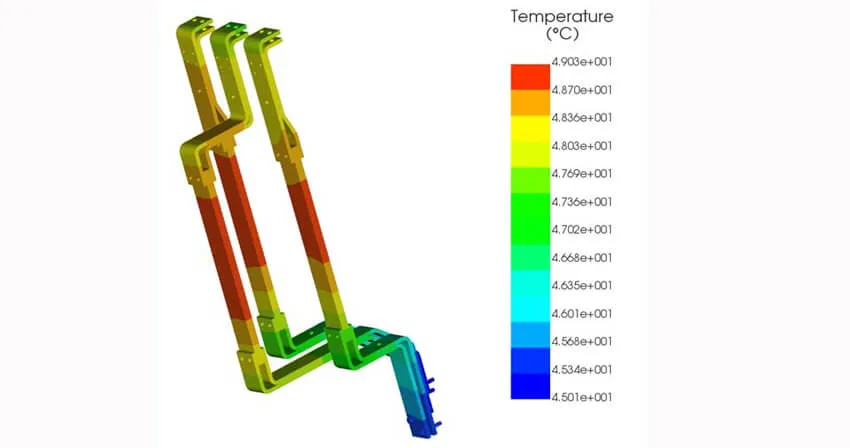
As current increases, electrical resistance produces heat. Therefore, the allowable current should be evaluated together with the permitted temperature rise.
Installation Conditions
Heat dissipation depends on whether the busbar is exposed to air, installed inside an electrolytic cell, connected to other conductive components, or surrounded by liquid or other materials.
Contact Resistance
Connections, drilled holes, welded areas and terminal interfaces can affect local heating. Proper machining and connection design are therefore important for high-current applications.
A Practical Engineering Approach
For preliminary design, engineers can follow this sequence:
Busbar dimensions → Cross sectional area → Material conductivity → Current density → Resistance → Heat generation → Temperature rise → Allowable current
For a titanium clad copper busbar, the calculation should be based on the actual construction rather than relying only on a general copper busbar ampacity table.
For example, a busbar made from C11000 copper with Gr.2 titanium cladding should be evaluated according to its copper core dimensions, titanium thickness, operating current, installation environment and allowable temperature rise.
Why Titanium Clad Copper Is Used for High Current Applications
Titanium clad copper combines two different material functions within one component.
The copper core provides high electrical conductivity and efficient current transmission, while the titanium cladding provides resistance to corrosive electrolytes and aggressive operating environments.
This combination makes titanium clad copper suitable for applications where a conventional bare copper busbar may require additional protection.
Typical applications include:
· Electroplating equipment · Electrowinning systems · Electrolytic cells · Chlor-alkali equipment · Hydrometallurgical systems
· Anode and cathode conductive systems · High current conductive components
Final Considerations for Busbar Sizing
There is no single current value that applies to every titanium clad copper busbar. The appropriate current carrying capacity should be determined from the busbar dimensions, copper grade, titanium cladding, current density, operating temperature and installation conditions.
For engineering and procurement, it is therefore important to provide the required current, busbar dimensions, material combination, titanium thickness and operating environment when specifying a titanium clad copper busbar.
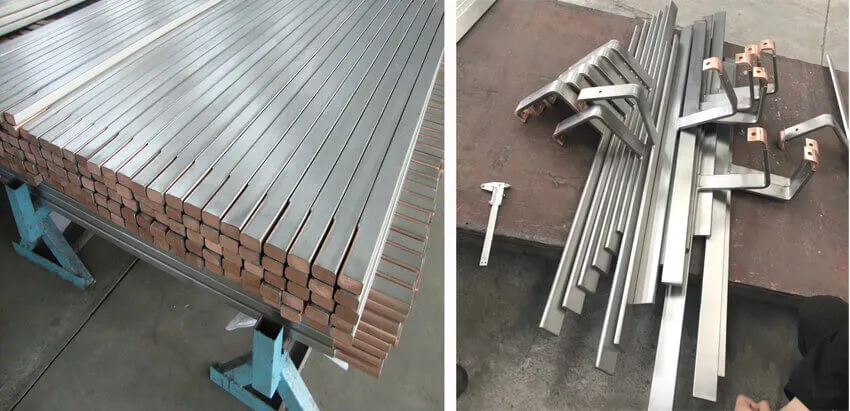
Jetvision can supply titanium clad copper flat bars and busbars in customized dimensions, with options for drilling, bending, machining and other fabrication requirements according to project specifications.
 +86-731-82224155
 8613272400394
 enquiry@jetvisiontitanium.com