Titanium Clad Copper

titanium clad copper round bar,titanium copper clad round bar,Ti-Cu clad round bar,titanium clad copper bar,titanium copper composite bar,titanium clad copper rod,custom titanium clad copper bar
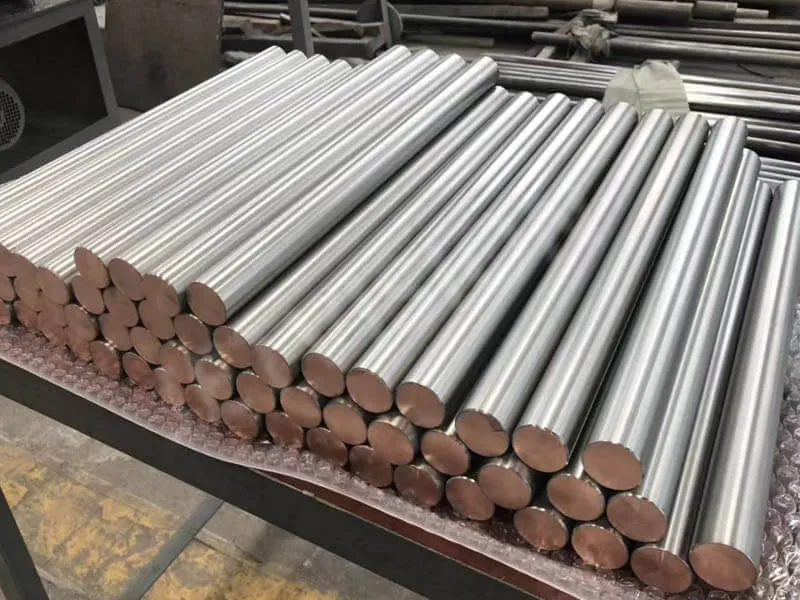
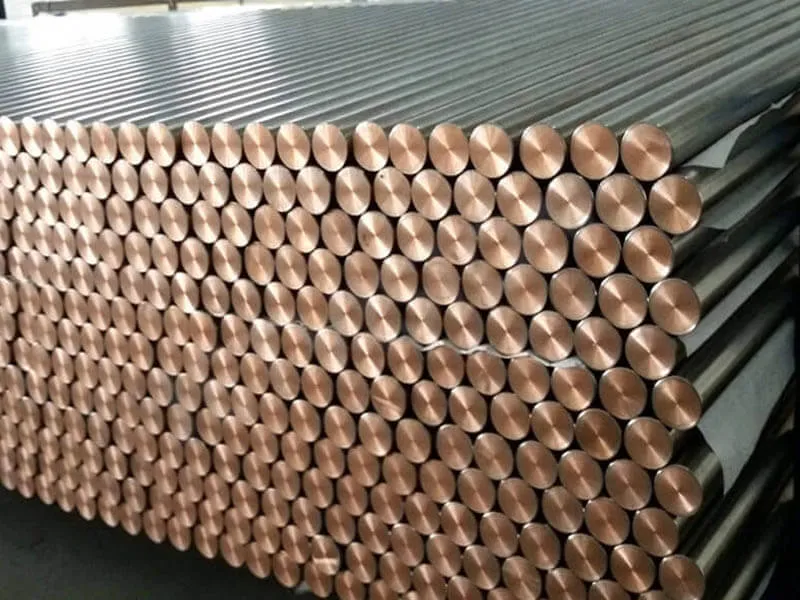
Titanium Clad Copper Round Bar

Titanium Clad Copper Round Bar

Grade:Ti: TA1 / TA2 (Gr1/Gr2)andCu: C11000/C10200

Width: 20–80 mm or custom

Thickness: Titanium single layer thickness: 1-3mm

Length: as request, custom

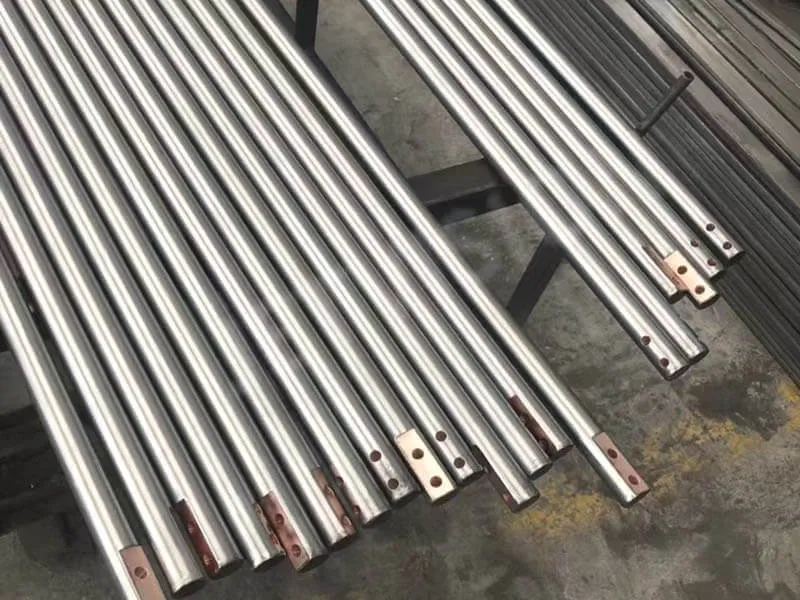
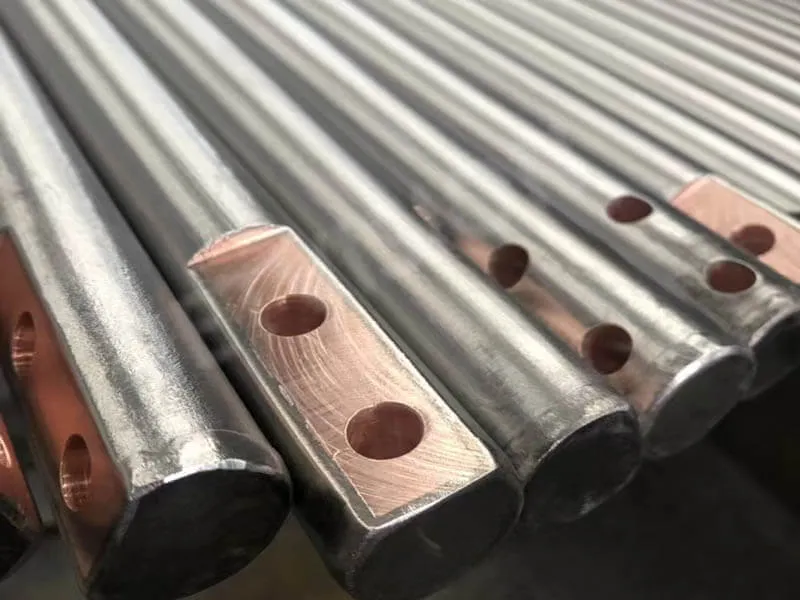
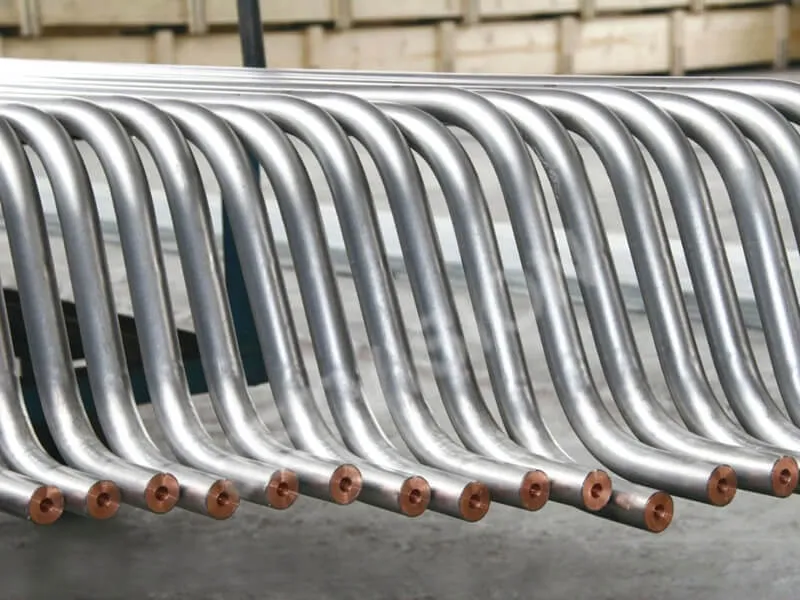
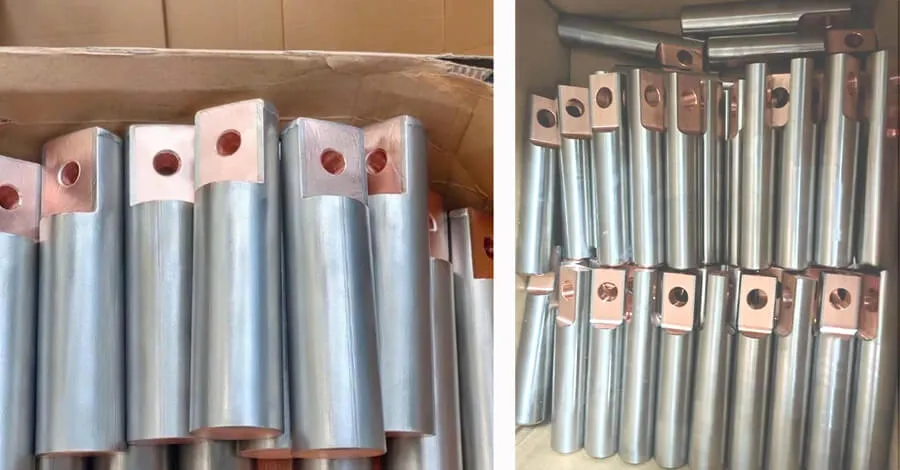
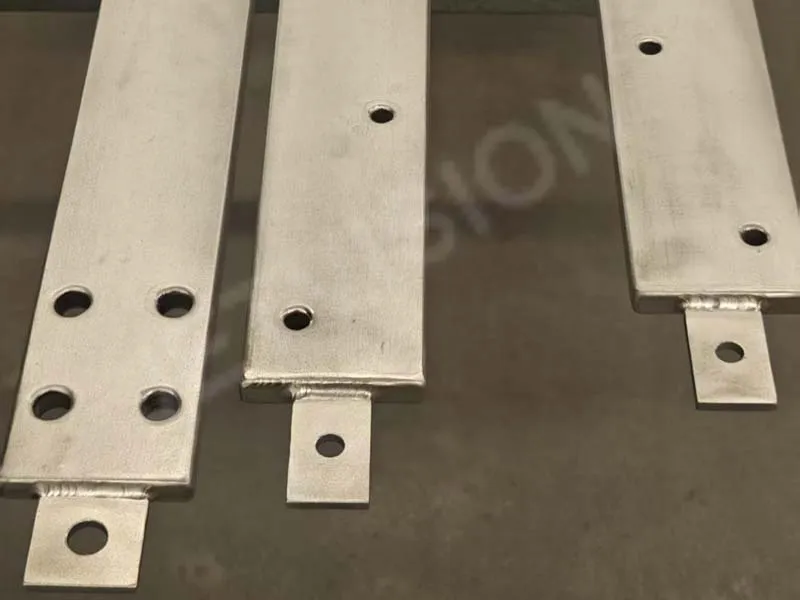
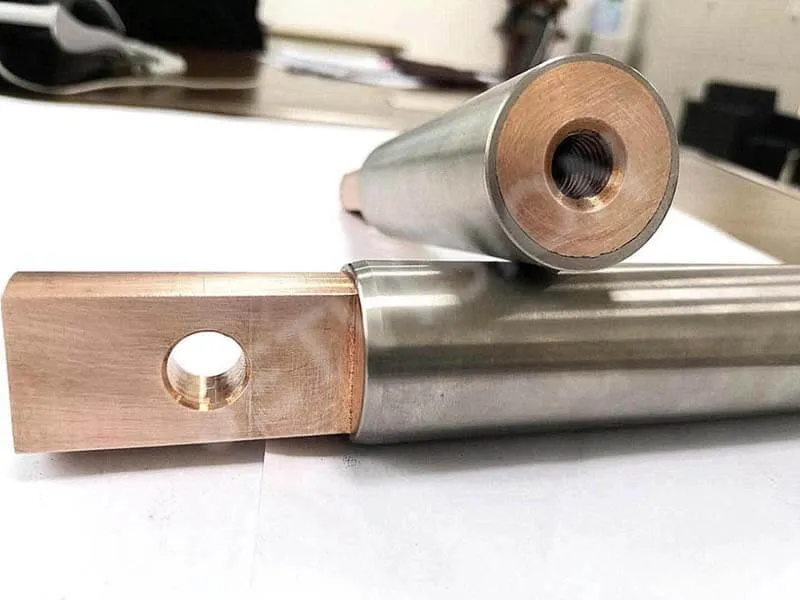
Processing: Bending, Welding, Driling, Tapping, Grooring, Threading, Perforated, End Muchining

Surface Finishes: Machined (standard), coated or treated

Product Description

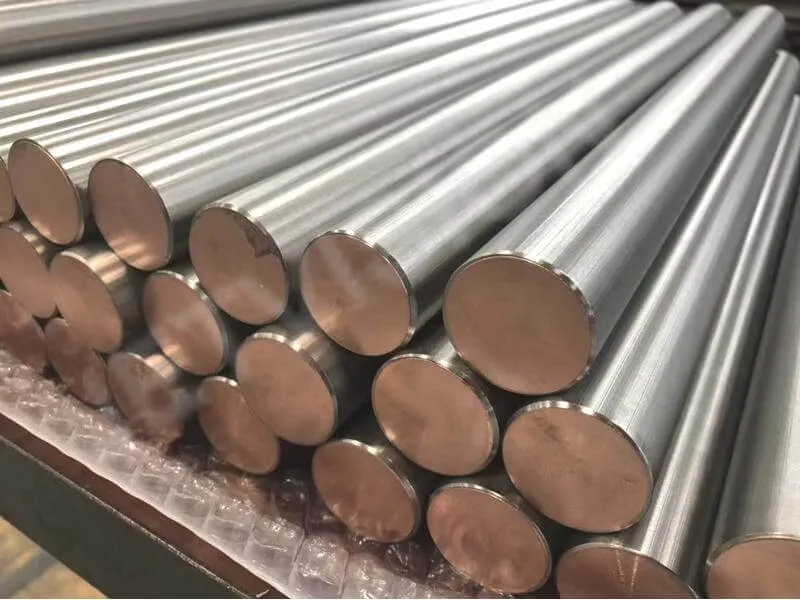
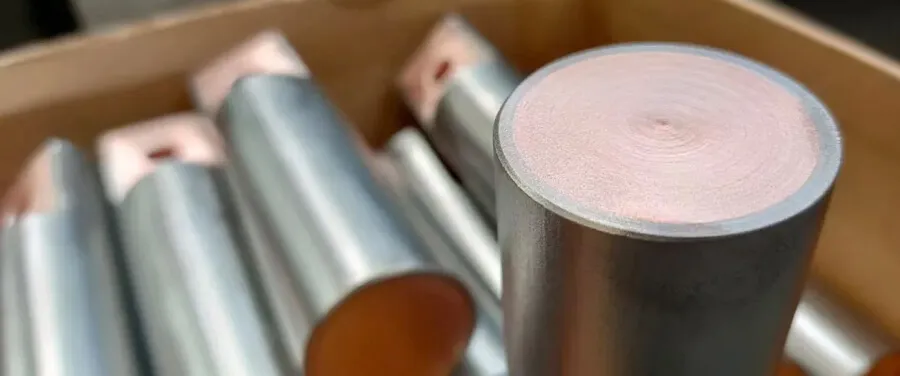
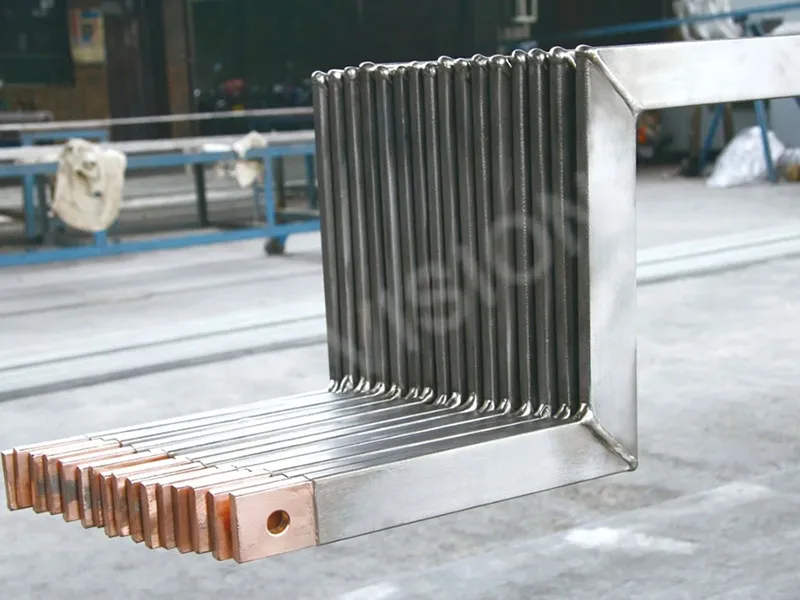
Titanium Clad Copper Round Bar is a high performance bimetallic composite bar, consisting of a copper core metallurgically bonded with a corrosion-resistant titanium layer. It combines the high electrical conductivity of copper with the excellent corrosion resistance of titanium.


In electrochemical equipment, it is mainly used as a conductive and supporting component for anodes and cathodes, including anode connection bars, cathode connection bars, electrode supports, and current-carrying connections. The titanium cladding protects the copper core from corrosive electrolytes while maintaining efficient electrical conduction.


Jetvision supplies Titanium Clad Copper Round Bars in customized diameters, lengths, and titanium cladding thicknesses according to customer requirements.


Key Features

Copper core for high electrical conductivity

Titanium outer layer for excellent corrosion resistance

Strong metallurgical bonding between titanium and copper

More durable in corrosive and electrochemical environments

Available in customized diameters and lengths

Suitable for machining, welding and further fabrication

Various titanium and copper grades available

Custom cross sections and cladding thicknesses available

Why Choose Titanium Clad Copper Round Bar?

High Electrical Conductivity

The copper core provides excellent electrical conductivity, making the round bar suitable for applications where efficient current transmission is required. Unlike solid titanium, the composite structure reduces the amount of titanium required while retaining its corrosion resistant surface.

Excellent Corrosion Resistance

The titanium outer layer provides protection against many corrosive chemicals and aggressive operating environments. This makes titanium copper clad round bar suitable for electrochemical and chemical processing applications where conventional copper components may suffer from corrosion.

Reliable Bonding

A properly manufactured titanium copper interface provides stable bonding between the two metals. This helps maintain structural integrity during machining, installation and long-term operation.

Customizable Construction

The diameter, length, copper-to-titanium ratio and titanium cladding thickness can be customized according to the customer's application. This allows the material to be optimized for electrical conductivity, corrosion resistance, mechanical requirements and installation conditions.

Manufacturing Process

The manufacturing route depends on the required dimensions, bonding requirements and final application.

Copper Core Preparation → Titanium Cladding → Bonding → Sizing → Heat Treatment→ Machining → Surface Treatment → Inspection → Packaging

For precision applications, additional machining and dimensional inspection can be performed according to customer drawings.


1. Material Preparation

High quality copper and titanium materials are selected according to the required specifications. Common materials include C11000 / T2 copper and Grade 1 / Grade 2 titanium.

2. Surface Preparation

The titanium and copper surfaces are carefully cleaned and prepared to ensure a clean bonding interface and reliable titanium-copper bonding.

3. Explosive Welding

Titanium and copper are joined through controlled explosive welding, forming a strong metallurgical bond between the titanium cladding and copper core.

4. Rolling & Sizing

The bonded titanium clad copper material is rolled and sized to achieve the required flat bar width, thickness, cladding thickness and dimensional accuracy.

5. Straightening & Machining

The material is straightened to meet flatness and straightness requirements, then cut and machined according to customer drawings. Drilling, slotting, grooving and CNC machining are available.

6. Inspection & Testing

Finished titanium clad copper flat bars are inspected for dimensions, surface condition, electrical conductivity and bonding integrity. Ultrasonic testing (UT) and other tests can be provided when required.

7. Final Inspection & Packaging

After final inspection, the titanium clad copper flat bars are securely packaged to protect the surface and product quality during transportation.

Applications

Titanium Clad Copper Round Bar is commonly used in applications that require both electrical conductivity and corrosion resistance, including:

         · Electroplating equipment

         · Electrolysis systems

         · Electrochemical equipment

         · Chemical processing equipment

         · Chlor-alkali industry

         · Metal processing equipment

         · Corrosion resistant electrical components

         · Anode and cathode connection systems

         · Industrial current conducting components

         · Custom electrochemical equipment

For applications involving direct contact with highly corrosive media, the appropriate titanium grade and cladding thickness should be selected according to the operating environment.

Quality Control

Each titanium clad copper round bar can be inspected according to the required technical specifications. Our quality control may include:

· Raw material inspection     · Chemical composition verification     · Dimensional inspection     · Surface inspection     · Bonding quality inspection

· Electrical conductivity testing    · Mechanical testing when required    · Ultrasonic or other NDT methods when applicable     ·Final inspection and documentation

Inspection reports and material certificates can be supplied according to customer requirements.


Packaging & Delivery

Titanium clad copper round bars are carefully protected during handling, packaging and transportation to prevent surface damage, deformation and contamination.

For export orders, suitable protective packaging and export-grade wooden crates can be provided according to product dimensions and shipping requirements.


Custom Titanium Clad Copper Round Bar

We provide custom titanium clad copper round bars for OEM and industrial applications. Customers can specify:

· Outer diameter     · Overall length     · Copper core diameter     · Titanium cladding thickness     · Titanium grade     · Copper grade

· Surface finish     · Dimensional tolerances     · Machining requirements     · Quantity and packaging requirements

Drawings, technical specifications or application information can be provided for customized production.

FAQ

1. How does the copper to titanium ratio affect the performance of a titanium clad copper round bar?

The copper-to-titanium ratio directly affects electrical conductivity, corrosion resistance, weight and cost. A larger copper core generally provides better current-carrying capability, while a thicker titanium layer provides greater protection in corrosive environments. The optimum ratio should therefore be determined according to the required current, service medium, mechanical conditions and expected service life rather than simply maximizing either material.

2. Does increasing the titanium cladding thickness always improve corrosion resistance?

Not necessarily. Titanium cladding must be thick enough to provide continuous and durable protection, but excessive thickness may increase material cost and reduce the economic advantage of the composite structure. Cladding thickness should be selected based on the corrosive medium, temperature, mechanical loading, surface condition and expected service life.

3. What should be considered when selecting the diameter of a titanium clad copper round bar?

Diameter selection depends on more than mechanical dimensions. Electrical current, allowable current density, heat generation, connection method, mechanical loading and available installation space should all be considered. For electrical applications, the copper core size is particularly important because it determines a major part of the conductor's current-carrying capability.

4. Can titanium clad copper round bars be machined without damaging the titanium copper interface?

Yes, provided that appropriate machining parameters and tooling are used. Cutting forces, heat generation and excessive deformation should be controlled to avoid damaging the titanium layer or creating defects at the bonded interface. For precision components, machining allowances and the final surface condition should be considered during the initial design stage.

5. Is the titanium layer electrically conductive enough to replace the copper core?

The titanium layer is electrically conductive, but its electrical conductivity is much lower than that of copper. Therefore, the copper core is the primary current-carrying component in most titanium clad copper designs, while the titanium layer mainly provides corrosion-resistant protection. This is one of the key reasons for using a clad structure instead of solid titanium.

6. What happens if the titanium cladding is locally damaged during machining or installation?

Local damage can expose the copper substrate to the service environment and may reduce the corrosion protection of the composite. The severity depends on the application and the nature of the exposed area. For critical electrochemical or chemical applications, surface integrity should therefore be inspected after machining, handling and installation.

7. How is the bonding quality between titanium and copper evaluated?

Bond quality can be evaluated using methods appropriate to the product design and applicable specifications, including visual and dimensional inspection, mechanical testing and non-destructive examination where required. For critical components, the evaluation should focus on detecting discontinuities, delamination or other defects that could affect long-term service performance.

8. Can titanium clad copper round bar be welded or joined to other components?

It can be incorporated into welded or mechanically joined assemblies, but the joining method must account for the different metallurgical characteristics of titanium and copper. Direct welding between the two metals can be challenging because of their different melting behavior and metallurgical compatibility. The appropriate joining technique should therefore be selected according to the specific joint design and service conditions.

9. Why choose titanium clad copper instead of solid titanium for conductive components?

Solid titanium provides excellent corrosion resistance but has much lower electrical conductivity than copper. Titanium clad copper uses copper where high electrical conductivity is needed and titanium where corrosion protection is required. This combination can provide a more balanced solution in applications where both properties are important.

10. What information should engineers provide when specifying titanium clad copper round bar?

For accurate material selection and quotation, engineers should normally provide the outer diameter, overall length, copper grade, titanium grade, required cladding thickness, dimensional tolerances, electrical requirements, service medium, operating temperature and connection or machining requirements. Application information is par