Why Conductivity Drops in Electroplating Busbars and How Titanium Clad Copper Solves the Problem ?
In modern electroplating systems, busbars play a critical role in delivering stable electrical current to the plating tank. A small increase in electrical resistance can result in higher voltage drop, increased energy consumption, uneven current distribution, and unstable plating quality.
But why does the conductivity of an electroplating busbar decrease over time?
The answer is usually related to corrosion, oxidation, contact resistance, material degradation, and operating conditions.
Corrosion of the Busbar Surface
Electroplating environments are often exposed to acidic or chemically aggressive solutions, including sulfuric acid, hydrochloric acid, chromic acid, chloride-containing electrolytes, and other corrosive chemicals.
When a conventional copper busbar is exposed to moisture, chemical vapors, or electrolyte contamination, its surface may gradually corrode.
As corrosion progresses, the effective conductive area can decrease and the electrical resistance can increase. Copper corrosion products can also accumulate on contact surfaces, affecting the connection between the busbar and electrodes.
This can lead to:Higher electrical resistance, Increased voltage drop, Localized heating, Unstable current distribution, Reduced plating efficiency, Shorter busbar service life
Copper busbars provide excellent electrical conductivity, but their corrosion resistance can become a limitation in aggressive electroplating environments.
Copper Oxidation Increases Contact Resistance
Another important reason for conductivity loss is oxidation.
Copper reacts with oxygen and moisture to form oxide layers on its surface. These oxide layers have much lower electrical conductivity than metallic copper.
The problem becomes particularly serious at electrical contact points. If the contact surface becomes oxidized or contaminated, the actual conductive contact area can decrease, causing contact resistance to increase.
Higher contact resistance means that more electrical energy is converted into heat rather than being efficiently transferred to the electroplating system.
In high current applications, even a relatively small increase in contact resistance can contribute to noticeable voltage loss and localized heating.
Corrosion Changes the Current Carrying Surface
For an electroplating busbar, conductivity is not determined only by the original material specification.
The actual operating condition of the busbar also matters.
Long-term exposure to corrosive chemicals can cause:
Surface corrosion → Material loss → Reduced effective cross-section → Increased resistance → Higher voltage drop
At the same time, corrosion at connection points can create unstable electrical contacts.
This is one reason why a busbar that initially performs well may gradually experience higher resistance after extended operation.
Poor Connections Can Cause Additional Voltage Drop
The connection between the busbar and the electrode is another critical factor.
Loose connections, contaminated contact surfaces, insufficient contact area, mechanical wear, and corrosion can all increase contact resistance.
A simplified relationship is:
Voltage Drop = Current×Resistance
As the current increases, the effect of additional resistance becomes more significant.
For electroplating lines operating at high current, maintaining low-resistance and stable electrical connections is therefore essential for consistent current transmission.
Why Pure Titanium Is Not the Complete Solution
Titanium has excellent corrosion resistance and is widely used in electrochemical and electroplating environments. However, titanium has much lower electrical conductivity than copper.
According to published technical data, commercially pure titanium has conductivity of only a few percent IACS, while high-conductivity copper is close to 100% IACS.
Therefore, using solid titanium as the main current-carrying busbar can result in significantly higher electrical resistance compared with copper.
This creates a common engineering challenge:
Copper = Excellent conductivity but limited corrosion resistance
Titanium = Excellent corrosion resistance but low electrical conductivity
So, is there a way to combine the advantages of both materials?
Titanium Clad Copper Busbar: Combining Conductivity and Corrosion Resistance
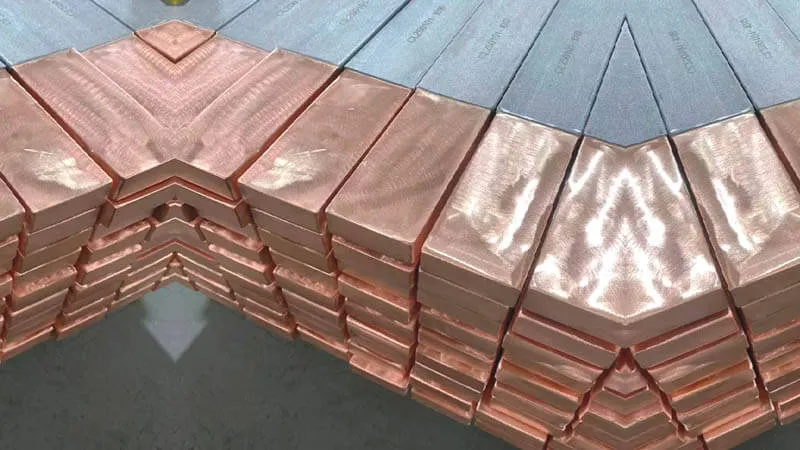
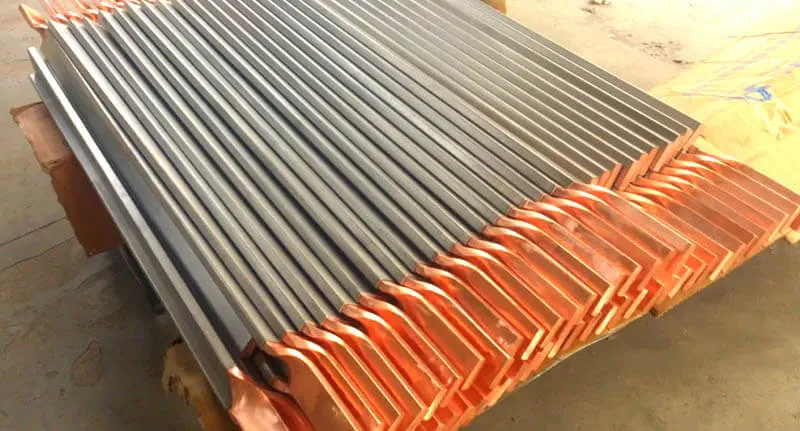
This is where Titanium Clad Copper Busbar becomes an effective solution.
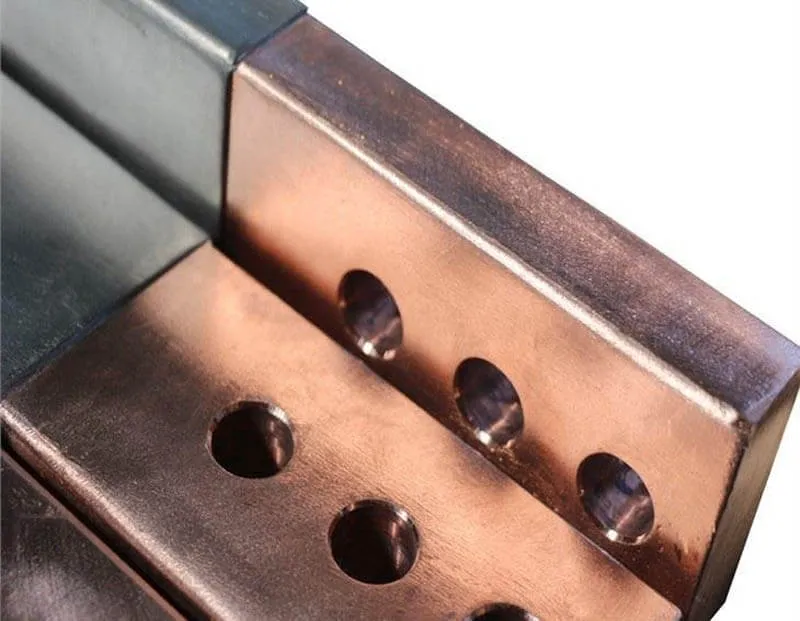
A titanium clad copper busbar combines:
Copper core: Provides high electrical conductivity and carries the majority of the electrical current.
Titanium outer layer: Provides corrosion protection against aggressive electrolytes and chemical environments.
Metallurgical bonding: Creates a strong connection between the titanium and copper layers.
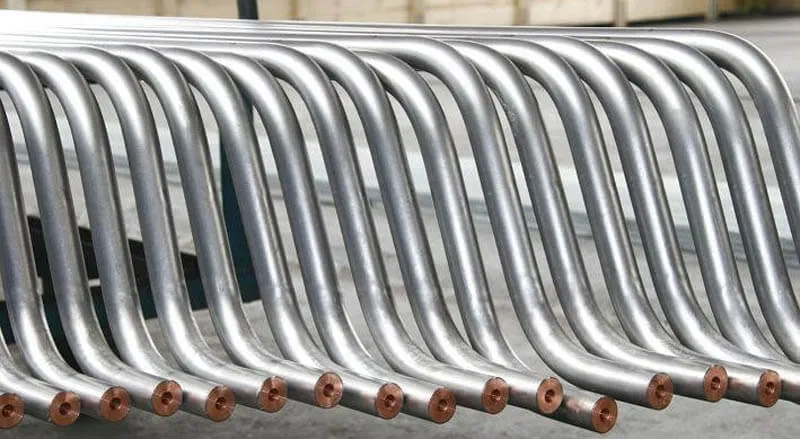
This composite structure allows the busbar to maintain efficient current transmission while protecting the copper core from the surrounding corrosive environment. Titanium clad copper is specifically used for electroplating, electrolysis, hydrometallurgy, chlor-alkali, PCB processing, and other electrochemical applications.
How Titanium Cladding Helps Maintain Electrical Performance
The key advantage is not that titanium itself becomes the main conductor.
Instead, the copper core remains the primary current-carrying component, while the titanium layer acts as a protective corrosion-resistant barrier.
This design helps prevent the copper core from being directly exposed to corrosive chemicals.
As a result, titanium clad copper busbars can provide:
· Stable electrical conductivity · Lower voltage drop · Better corrosion resistance · More stable current distribution
· Reduced maintenance · Longer service life · Reduced risk of electrolyte contamination
In electroplating applications, protecting the copper core is particularly important because corrosion and contamination can affect both electrical performance and plating quality.
Contact Area Is Still Critical
Although titanium clad copper provides excellent corrosion protection, the connection design must also be considered carefully.
Depending on the application, the electrical contact area may require machining, welding, or a specially designed connection structure.
The objective is to achieve a reliable electrical path while maintaining corrosion protection around the copper core.
For this reason, titanium clad copper busbars should be designed according to:
· Working current · Busbar dimensions · Titanium cladding thickness · Copper grade · Connection method
· Operating temperature · Electrolyte composition · Required voltage drop · Installation environment
Proper engineering design is essential to achieve stable long term performance.
Signs That Your Electroplating Busbar May Be Losing Conductivity
Operators should pay attention to several common warning signs:
1. Increasing voltage drop
The required voltage gradually increases under similar operating conditions.
2. Localized overheating
Certain connection points or sections of the busbar become noticeably hotter.
3. Uneven plating thickness
Unstable current distribution can cause differences in coating thickness across the workpiece.
4. Visible corrosion or oxidation
Surface discoloration, corrosion products, or pitting may indicate material degradation.
5. Frequent maintenance
Repeated cleaning, replacement, or repair of busbars and connection points may indicate an underlying corrosion or contact resistance problem.
Choosing the Right Busbar for Electroplating
For electroplating equipment operating in corrosive environments, electrical conductivity should not be considered separately from corrosion resistance.
A high quality busbar should provide a balance between:
Electrical Conductivity + Corrosion Resistance + Mechanical Strength + Reliable Connections
Traditional copper busbars remain an excellent choice where corrosion exposure is limited. However, when high current must be transmitted in an aggressive chemical environment, Titanium Clad Copper Busbars can provide a more durable solution by combining the conductivity of copper with the corrosion resistance of titanium.
 +86-731-82224155
 8613272400394
 enquiry@jetvisiontitanium.com