Titanium clad copper is widely used in electroplating, electrolysis, chlor-alkali production, PCB manufacturing, and other electrochemical industries because it combines the high electrical conductivity of copper with the excellent corrosion resistance of titanium. In many projects, however, standard bars or plates are not sufficient. Components often require custom processing such as bending, drilling, milling, or welding to meet specific equipment designs.
A common question from engineers and procurement teams is: Can titanium clad copper be bent or machined without damaging the bond between the titanium and copper?
The answer is yes. When processed using the correct methods and parameters, titanium clad copper can be fabricated into a wide range of custom components while maintaining its metallurgical bond and overall performance.
Typical fabrication processes include:
· CNC milling · Drilling · Tapping · Cutting and sawing · Bending and forming · Surface machining
· TIG welding on the titanium layer · Custom fabrication according to engineering drawings
These operations allow titanium clad copper to be supplied as fully finished components rather than simple raw materials.
Can Titanium Clad Copper Be Bent?
Yes. Titanium clad copper can be bent, provided that appropriate tooling, bend radius, and process controls are used.
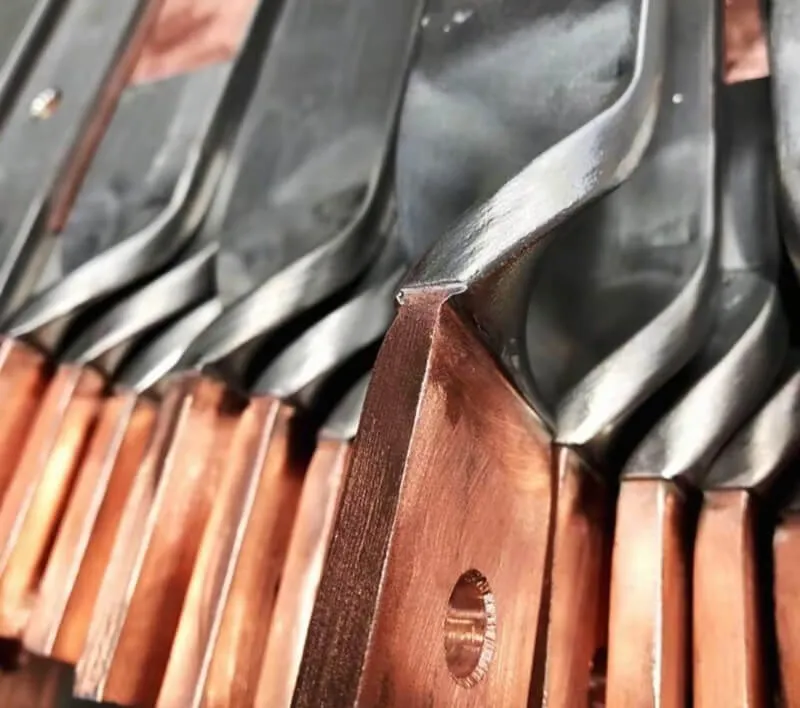
Because titanium and copper have different mechanical properties, bending must be carefully planned to avoid excessive stress on the bonded interface.
Manufacturers typically consider factors such as:
· Material thickness · Titanium cladding thickness · Copper core dimensions · Required bending angle · Minimum bend radius
· Direction of the titanium layer during forming
For most applications, cold bending is suitable. However, components with large cross-sections or complex geometries may require controlled forming procedures to maintain dimensional accuracy and bond integrity.
When properly processed, the metallurgical bond remains stable throughout the bending operation.
Can Titanium Clad Copper Be Machined?
Titanium clad copper can be machined using conventional CNC equipment, although cutting parameters should be optimized for composite materials.
Common machining operations include:
· Precision cutting · Face milling · Slot milling · Drilling · Reaming · Thread tapping · Chamfering · Edge profiling
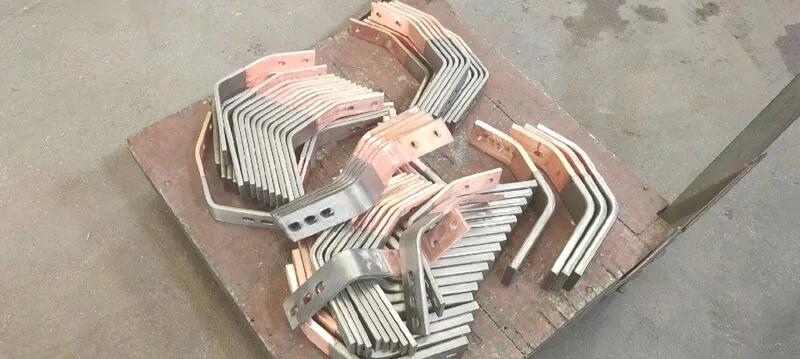
Selecting suitable cutting tools, feeds, and speeds helps achieve clean surfaces while minimizing burr formation and tool wear.
Since titanium has lower thermal conductivity than copper, effective cooling and proper chip removal are also important during machining.
Drilling and Threading
Drilled holes are frequently required for electrical connections, bolted assemblies, and equipment installation.
High quality machining ensures:
· Accurate hole positioning · Smooth hole walls · Consistent thread quality · Excellent assembly accuracy
Depending on the application, threaded holes may be produced directly in the copper core or in designated areas of the composite material, following the customer's design requirements.
Welding Titanium Clad Copper
In many electrochemical applications, the titanium surface must remain continuous to provide corrosion protection.
For this reason, welding is generally performed on the titanium cladding using appropriate titanium welding procedures, such as GTAW (TIG welding), while carefully controlling heat input.
Proper welding techniques help preserve the corrosion-resistant titanium layer and reduce the risk of distortion or damage to the metallurgical bond.
Quality Control After Machining
After bending or machining, finished titanium clad copper components should undergo comprehensive inspections to ensure they meet design and performance requirements.
Typical quality checks include:
· Dimensional inspection · Visual surface examination · Cladding thickness verification · Bond integrity inspection
· Ultrasonic testing (UT), when required · Flatness and straightness measurement
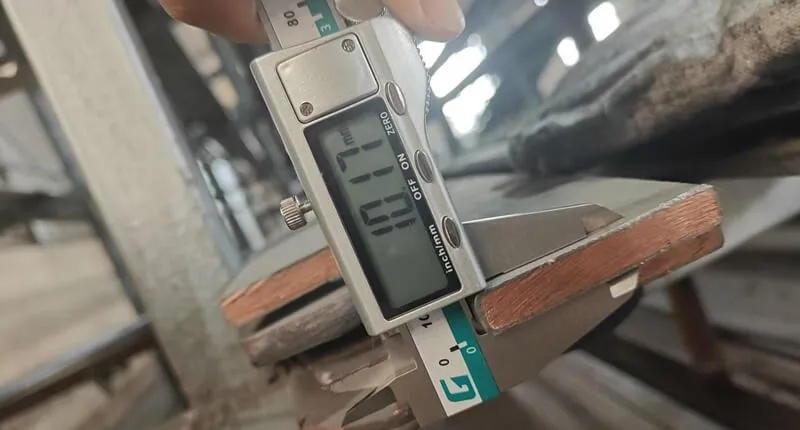
These inspections help ensure that machining operations have not affected the composite structure or functional performance.
Typical Custom Machined Titanium Clad Copper Products
Titanium clad copper can be fabricated into a wide range of custom components, including:
· Busbars
· Conductive bars
· Anode support bars
· Cathode connectors
· Transition joints
· Mounting plates
· Custom electrical connectors
· Precision machined components for electrochemical equipment
Custom manufacturing enables equipment designers to reduce assembly time while improving installation accuracy and long term reliability.
 +86-731-82224155
 8613272400394
 enquiry@jetvisiontitanium.com