Titanium clad copper is widely used in electroplating, electrolysis, hydrometallurgy, electrowinning, chlor-alkali production, PCB plating and other electrochemical applications. By combining the excellent electrical conductivity of copper with the corrosion resistance of titanium, titanium clad copper provides a reliable solution for highcurrent applications in aggressive chemical environments.
However, selecting a highquality titanium clad copper busbar is only the first step. Proper material selection, installation, surface protection and regular inspection are also important for maximizing its service life.
Why Does Titanium Clad Copper Have a Long Service Life?
The structure of titanium clad copper is designed to combine the advantages of two different metals.
The copper core provides high electrical conductivity and efficient current transmission, helping reduce electrical resistance and voltage loss.
The titanium cladding acts as a corrosion resistant protective layer. Titanium is highly resistant to many acidic, alkaline, chloride-containing and electrolyte environments commonly found in electroplating and hydrometallurgical processes.
The two metals are joined through a metallurgical bonding process, such as explosive bonding or roll bonding, creating a strong interface that can withstand electrical, thermal and mechanical loads.
This combination makes titanium clad copper particularly suitable for applications where pure copper may corrode too quickly while pure titanium cannot provide sufficient electrical conductivity.
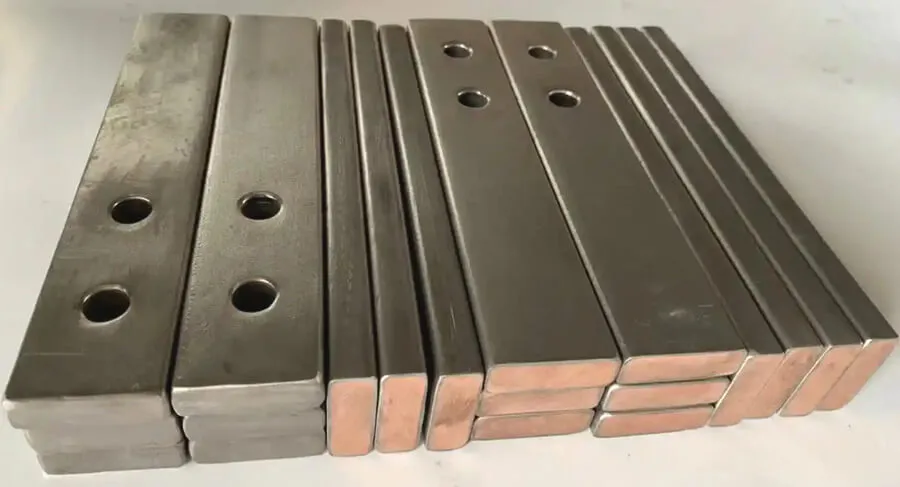
Select the Correct Titanium Grade
Choosing the appropriate titanium grade is one of the most important factors affecting service life.
For many electrochemical applications, commercially pure titanium such as Titanium Grade 1 or Grade 2 is commonly selected because of its corrosion resistance and suitability for fabrication.
However, the best titanium grade depends on the actual working environment, including:
· Electrolyte composition · Acid or alkaline concentration · Chloride concentration · Operating temperature
· Current density · Exposure to chemical gases or splashing
Therefore, the titanium grade should be selected according to the actual operating conditions rather than simply choosing the lowest-cost material.
Choose the Correct Titanium Cladding Thickness
Titanium cladding thickness directly affects the protection of the copper core.
If the titanium layer is too thin, mechanical damage, machining or long term corrosion exposure may increase the risk of copper exposure. A properly designed titanium layer provides a more reliable barrier between the copper core and the corrosive electrolyte.
The required cladding thickness should be determined according to the application, dimensions, current load and working environment.
For customized titanium clad copper busbars, manufacturers can provide different titanium-to-copper ratios and cladding thicknesses according to the customer's drawings and technical requirements.
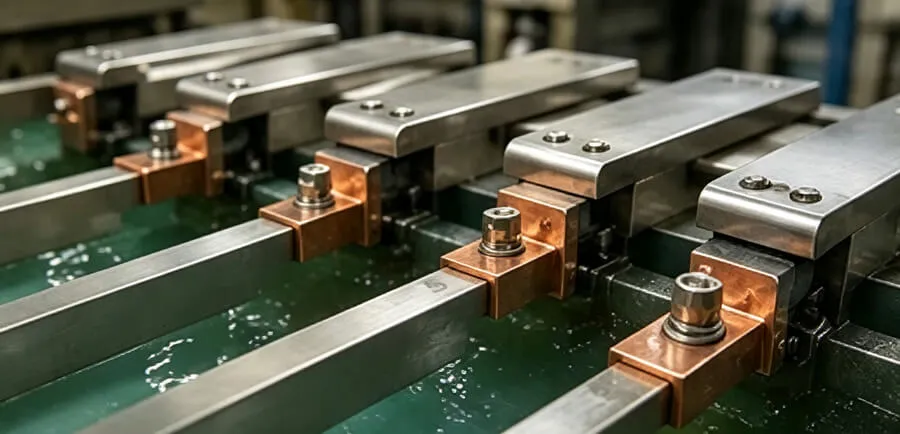
Protect the Titanium Surface During Installation
One of the most important factors affecting the service life of titanium clad copper is surface damage.
Although titanium has excellent corrosion resistance, deep scratches, impact damage or improper machining can expose the copper core. Once the copper substrate comes into contact with an aggressive electrolyte, localized corrosion may occur.
During installation:
Avoid dragging the busbar across rough surfaces.
Prevent impact and unnecessary bending.
Use suitable lifting equipment.
Protect the titanium surface during transportation.
Avoid using inappropriate tools that may damage the cladding.
Inspect the surface before installation.
Proper handling can significantly reduce the risk of premature failure.
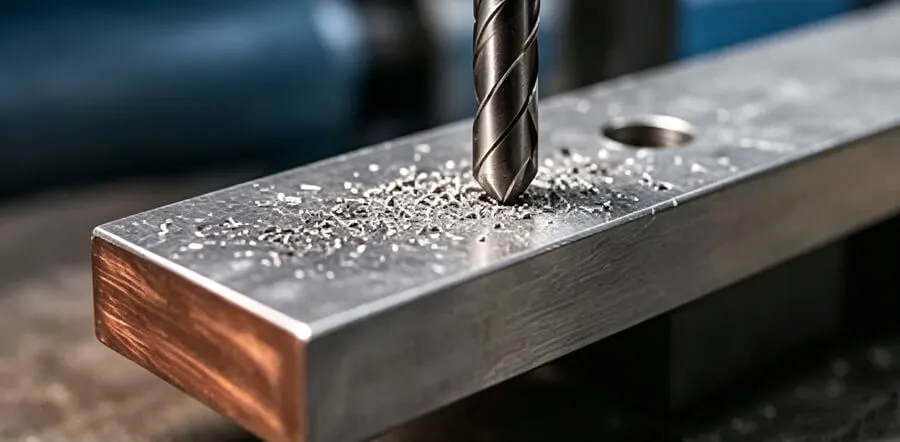
Pay Special Attention to Machining and Drilling
Titanium clad copper busbars are often supplied with customized holes, slots, threads, bends or other machining features.
Machining must be carefully controlled because excessive cutting depth can expose the copper core.
For drilled or machined titanium clad copper busbars, the machining process should be designed according to the titanium cladding thickness. Where necessary, titanium end sealing or other protective designs can be used to prevent direct exposure of the copper core.
This is especially important around: · Bolt holes · Threaded holes · Cut ends, Slots · Connection areas · Welded sections
Control Current Density and Operating Temperature
Electrical loading is another important factor affecting the service life of titanium clad copper busbars.
An undersized busbar operating under excessive current can generate additional heat and increase thermal stress. Repeated heating and cooling cycles may also place additional stress on the composite structure.
Therefore, the busbar cross-section should be selected according to:
Current → Current density → Busbar cross section → Heat generation → Operating temperature
Proper electrical design helps maintain stable current transmission and reduces unnecessary thermal stress.
For high current electrolysis and electrowinning systems, customized rectangular titanium clad copper busbars are often used to achieve the required current-carrying capacity and installation configuration.
Keep Contact Areas Clean
The connection between the titanium clad copper busbar and other conductive components is critical for maintaining low electrical resistance.
Oxidation, contamination, loose connections or electrolyte accumulation around contact areas can increase contact resistance and generate localized heat.
Regular inspection should focus on: · Connection bolts · Contact surfaces · Welding areas · Busbar joints · End connections · Areas exposed to electrolyte splashing
Keeping these areas clean and properly connected helps maintain stable electrical performance.
Inspect the Busbar Regularly
Regular inspection is one of the simplest ways to extend the working life of titanium clad copper.
A maintenance program can include:
Visual inspection:
Check for scratches, dents, cracks, deformation or exposed copper.
Dimensional inspection:
Check whether excessive deformation has occurred after long-term operation.
Electrical inspection:
Monitor voltage drop, contact resistance and abnormal temperature rise.
Connection inspection:
Check bolts, welds and connection points for looseness or overheating.
Early detection of surface damage or electrical problems can prevent a small issue from developing into a major failure.
Use the Right Titanium Clad Copper for the Application
There is no single titanium clad copper specification suitable for every application.
Different industries may require different shapes and designs:
Electroplating: flat bars, square bars and conductive beams
Copper electrowinning: rectangular busbars and conductive bars
Hydrometallurgy: high-current conductive bars and connectors
Chlor-alkali: specialized conductive components
PCB plating: precision conductive bars and customized components
Electrochemical water treatment: customized titanium clad copper connectors
Titanium clad copper can also be manufactured in round, square, rectangular and customized cross-sections to suit different equipment designs.
 +86-731-82224155
 8613272400394
 enquiry@jetvisiontitanium.com