In electrochemical processing systems, the anode and cathode are the two essential electrodes that control current flow and electrochemical reactions inside an electrolysis cell. The busbar system connects these electrodes to the DC power supply and must provide reliable electrical conductivity while withstanding aggressive electrolytes.
For this reason, titanium clad copper busbar is widely considered for applications that require both high electrical conductivity and excellent corrosion resistance.
By combining a highly conductive copper core with a corrosionresistant titanium layer, titanium clad copper provides a practical solution for current carrying components operating in demanding electrochemical environments.
What Are the Anode and Cathode in an Electrolysis Cell?
In an electrolysis cell, the anode and cathode are connected to a DC power supply and create the electrical circuit required for the electrochemical reaction.
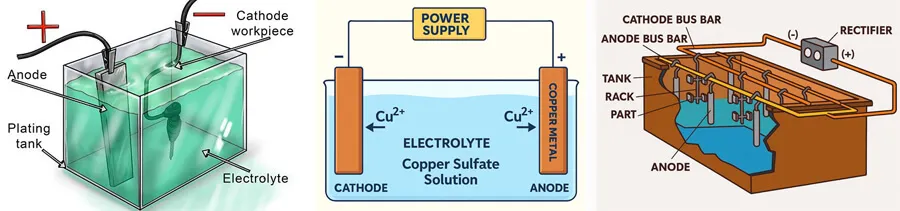
The two electrodes have different functions:
Anode (+): connected to the positive side of the DC power supply
Cathode (-): connected to the negative side of the DC power supply
Electrolyte: provides the ionic path between the electrodes
Busbar: carries high electrical current between the power supply and electrodes
In copper electrolysis, for example, copper ions in the electrolyte move toward the cathode, where copper is deposited. At the anode, oxidation reactions take place.
Therefore, the electrical connection between the DC power supply, busbar, anode and cathode is critical to the efficiency and stability of the entire electrolysis system.
Where Are Anode and Cathode Busbars Located?
The exact busbar configuration depends on the design of the electrolysis cell, but the basic electrical arrangement remains similar.
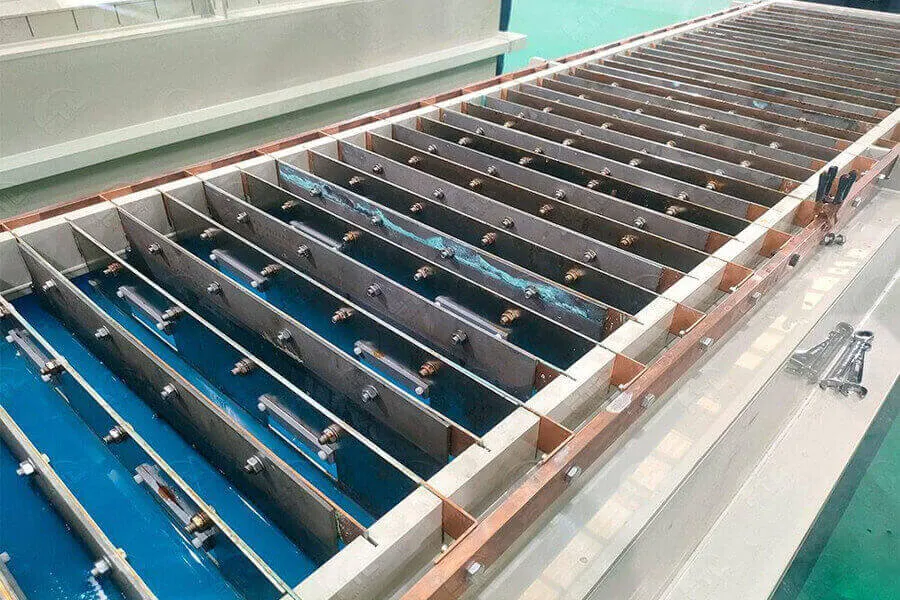
Cathode Side
The cathode busbar connects the negative side of the rectifier or DC power supply to the cathodes.
The cathode side generally requires:
Low electrical resistance
High current-carrying capacity
Stable mechanical connection
Good resistance to the electrolyte environment
Consistent electrical contact
For high current electrolysis systems, the busbar cross-section and electrical connection design directly influence voltage drop, current distribution and energy efficiency.
Anode Side
The anode busbar connects the positive side of the DC power supply to the anodes.
Because the anode area can be exposed to aggressive chemical conditions and electrochemical reactions, corrosion resistance is particularly important for components located close to the electrolyte.
Depending on the cell configuration, titanium clad copper busbars, titanium copper composite bars and other clad copper components can be engineered for specific anode or cathode current-transfer positions.
Why Use Titanium Clad Copper for Electrolysis Busbars?
A conventional copper busbar provides excellent electrical conductivity, but exposed copper can suffer from corrosion in many acidic or chemically aggressive electrolytes.
Titanium has almost the opposite combination of properties:
Excellent corrosion resistance
Good resistance to many acidic and chloride-containing environments
High chemical stability
Good mechanical strength
Lower electrical conductivity than copper
Titanium clad copper combines these two materials into one composite component.
The copper core provides the main electrical conduction path, while the titanium cladding provides a corrosion-resistant external surface.
This makes titanium clad copper busbar suitable for applications where a conventional copper busbar may require additional corrosion protection.
Typical advantages include:
High electrical conductivity
The copper core provides an efficient current path for high-current electrochemical equipment.
Corrosion resistance
The titanium outer layer helps protect the copper substrate from direct exposure to aggressive electrolytes.
Reduced maintenance
Protecting the conductive copper core can help extend the service life of current-carrying components.
High current capability
Titanium clad copper can be manufactured in various cross-sectional dimensions according to the electrical and mechanical requirements of the cell.
4Titanium Clad Copper Busbar for Electrowinning
Electrowinning (EW) is one of the important applications for titanium clad copper current-carrying components.
In an electrowinning system, metal ions in an electrolyte are reduced and deposited onto cathodes under an applied DC current.
Common electrowinning applications include:
Copper electrowinning
Zinc electrowinning
Nickel electrowinning
Cobalt electrowinning
Other hydrometallurgical metal recovery processes
The electrolysis cell typically contains multiple anodes and cathodes connected through a high-current busbar system.
In these environments, the combination of electrical conductivity and corrosion resistance becomes particularly important.
Titanium clad copper busbars can therefore be used in selected electrowinning cell current distribution and electrode connection systems.
Titanium Clad Copper in Electrorefining
Another important application is electrorefining.
Copper electrorefining uses an impure copper anode and a cathode. When DC current is applied, copper dissolves from the anode and is deposited as high-purity copper on the cathode.
The basic process includes:
Copper Anode → Electrolyte → Cathode
The electrical circuit also includes the rectifier, busbars and electrode connections.
Because copper electrorefining operates continuously with high electrical currents and acidic electrolytes, the busbar system needs to provide reliable electrical performance and adequate corrosion resistance.
Titanium clad copper busbar can be considered for current-carrying components exposed to these demanding operating conditions.
Anode Busbar vs. Cathode Busbar
|
Item
|
Anode Busbar
|
Cathode Busbar
|
|
Electrical polarity
|
Positive (+)
|
Negative (-)
|
|
Connection
|
DC power supply→Anode
|
DC power supply→Cathode
|
|
Main function
|
Supply current to anodes
|
Conduct current to cathodes
|
|
Environment
|
May be exposed to aggressive electrochemical conditions
|
May also be exposed to electrolyte or process atmosphere
|
|
Key requirements
|
Conductivity + corrosion resistance
|
Conductivity + corrosion resistance
|
|
Typical applications
|
Electrolysis, electrowinning, electrorefining
|
Electrolysis, electrowinning, electrorefining
|
The actual design, dimensions and cladding configuration should be determined according to the electrolysis cell design, operating current, electrolyte chemistry, electrode arrangement and installation method.
Common Shapes of Titanium Clad Copper Current Carrying Components
Titanium clad copper is not limited to one busbar shape.
Depending on the application, manufacturers can supply different configurations such as:
Titanium clad copper flat bar
Titanium clad copper rectangular bar
Titanium clad copper square bar
Titanium clad copper round bar
Titanium clad copper rod
Titanium clad copper electrode hanger bar
Customized titanium clad copper busbars
Machined and drilled titanium clad copper components
Bent and fabricated titanium clad copper parts
For electrolysis equipment, flat bars and rectangular busbars are commonly considered where a large contact area and defined current path are required.
For electrode connection systems, the titanium clad copper component can also be machined with holes, slots, bends or other customized features according to the equipment design.
 +86-731-82224155
 8613272400394
 enquiry@jetvisiontitanium.com