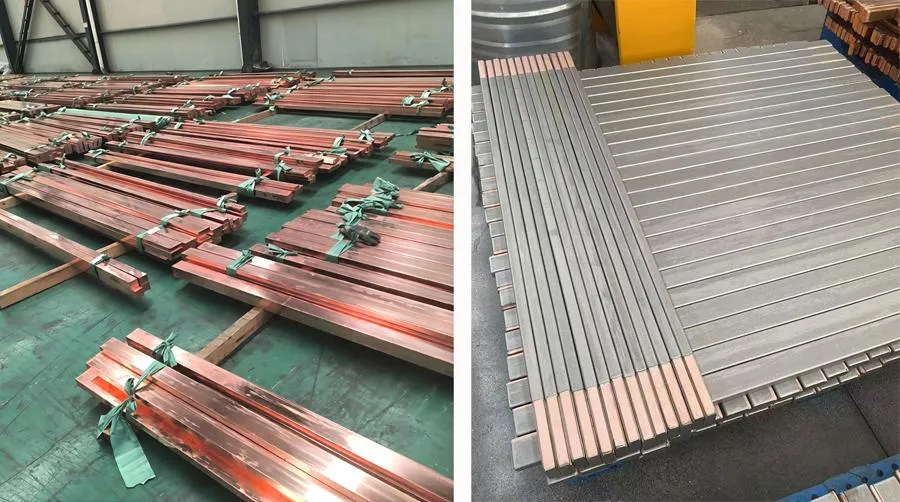
In electrochemical industries, selecting the right conductive material is critical for ensuring stable current transmission, corrosion resistance, and long-term equipment reliability. Titanium clad copper has become an increasingly popular alternative to pure copper in harsh electrolyte environments due to its unique combination of copper conductivity and titanium corrosion resistance.
When selecting conductive materials for electrochemical equipment, many engineers compare Titanium Clad Copper and Pure Copper. While both offer excellent electrical conductivity, their performance differs significantly in corrosive environments.
The best choice depends on your application, operating conditions, and long-term cost considerations.
1. Electrical Conductivity
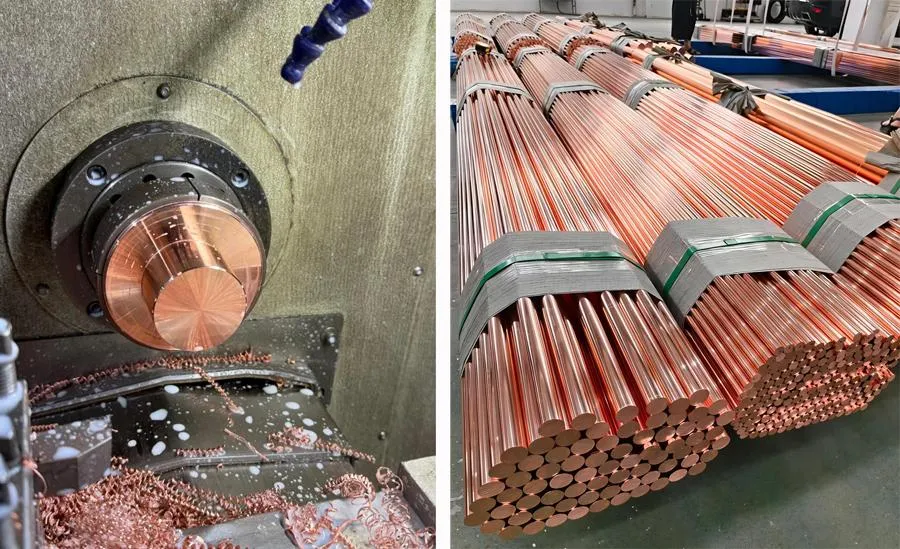
Pure copper is one of the best electrical conductors available, making it suitable for applications where corrosion is not a concern.
Titanium clad copper combines a high-conductivity copper core with a corrosion-resistant titanium outer layer. Although its conductivity is slightly lower than that of solid copper due to the titanium cladding, it still provides excellent current-carrying performance for most industrial electrochemical systems.
2. Corrosion Resistance
This is where titanium clad copper has a clear advantage.
Pure copper is susceptible to corrosion in acidic, alkaline, and chloride-containing electrolytes. Over time, corrosion can increase electrical resistance, contaminate the electrolyte, and shorten equipment life.
Titanium naturally forms a stable oxide film that protects the surface from aggressive chemicals. As a result, titanium clad copper performs exceptionally well in:
· Electroplating lines · Copper electrowinning · Zinc electrowinning · Chlor-alkali plants · PCB manufacturing · Water treatment systems
3. Service Life
Because pure copper gradually corrodes in harsh chemical environments, it typically requires more frequent replacement and maintenance.
Titanium clad copper is designed for long-term exposure to corrosive electrolytes, often delivering several times the service life of pure copper under identical operating conditions.
4. Maintenance Costs
Although pure copper has a lower initial purchase price, corrosion-related maintenance, production downtime, and replacement costs can significantly increase the total cost of ownership.
Titanium clad copper reduces maintenance frequency and improves production reliability, making it more economical over the equipment's lifecycle.
5. Mechanical Strength
Titanium provides excellent mechanical strength and wear resistance while protecting the copper core.
Titanium clad copper busbars are less likely to suffer surface damage or corrosion-related degradation during long-term operation.
6. Application Comparison
|
Feature
|
Titanium Clad Copper
|
Pure Copper
|
|
Electrical Conductivity
|
Excellent
|
Excellent (Highest)
|
|
Corrosion Resistance
|
Excellent
|
Poor in corrosive electrolytes
|
|
Current Carrying Capacity
|
High
|
Very High
|
|
Service Life
|
Very Long
|
Moderate
|
|
Maintenance Cost
|
Low
|
High
|
|
Initial Investment
|
Higher
|
Lower
|
|
Total Lifecycle Cost
|
Lower
|
Higher
|
|
Electroplating Applications
|
Excellent
|
Not Recommended
|
|
Chlor-Alkali Plants
|
Excellent
|
Not Suitable
|
|
Electrowinning & Electrorefining
|
Excellent
|
Limited
|
When Should You Choose Pure Copper?
Pure copper is a good choice when:
The environment is dry and non-corrosive.
Maximum electrical conductivity is the primary requirement.
Budget is the main concern.
Frequent maintenance is acceptable.
Typical applications include electrical switchgear, power distribution systems, transformers, and indoor electrical installations.
When Should You Choose Titanium Clad Copper?
Titanium clad copper is the preferred solution when:
Equipment operates in corrosive electrolytes.
Long service life is required.
Downtime must be minimized.
Stable electrical performance is critical.
Lifecycle cost is more important than initial purchase price.
It is widely used in:
· Electroplating equipment · Electrowinning systems · Electrorefining plants · Chlor-alkali production · PCB plating lines · Water treatment equipment · Cathodic protection systems
 +86-731-82224155
 8613272400394
 enquiry@jetvisiontitanium.com